Clear communication within an organization is a direct enabler of execution, culture, and performance. As teams become more distributed and workflows increasingly digital, the need for a structured communication strategy has become a functional requirement.
When employees understand expectations, priorities, and context, they make faster decisions, collaborate more effectively, and stay aligned with business objectives. In contrast, poor communication contributes to confusion, disengagement, and operational drag.
This article sets out the essential elements of an effective employee communication strategy. It explores the foundational principles, the role of HR and leadership, the technology that supports modern communication, and the steps needed to design and sustain a system that works across functions and teams.
What is Employee Communication?
Employee communication is the lifeblood of an organization, encompassing everything from high-level leadership updates to everyday peer-to-peer exchanges. It is about how employees stay informed, involved, and aligned with the company’s mission.
While often used interchangeably with internal communication, there is a subtle distinction. Internal communication acts as the infrastructure, covering essential logistics like IT alerts and HR policies. Employee communication, however, is the relational layer. It focuses on active engagement: sharing meaningful context, listening to feedback, and ensuring every individual feels connected to the bigger picture.
HR’s Role in Structuring Employee Communication
HR structures how information is planned, delivered, and sustained. Here is how they transform communication into a strategic asset:
1. Ensuring Consistency Across the Employee Lifecycle
HR aligns all messaging, from the first recruitment reach-out to the final exit interview, with the company’s core values and legal standards. This ensures that no matter where an employee is in their journey, the tone and message remain coherent and professional.
2. Empowering Managers as Communicators
Communication often fails at the middle-management level. HR bridges this gap by providing training, toolkits, and resources that equip managers to lead effective team huddles, deliver constructive feedback, and foster seamless collaboration.
3. Closing the Gap with Feedback Loops
Effective communication is never a one-way street. HR facilitates the "employee voice" through surveys, focus groups, and digital listening channels. By integrating this feedback into corporate strategy, HR ensures that leadership is listening to the employees.
4. Managing Conflict and Restoring Clarity
In any growing organization, communication can become fragmented. HR acts as the organizational "editor," intervening when misunderstandings arise to resolve conflict and restore alignment between diverging teams or departments.
5. Governing Digital Channels and Technology
HR leads the implementation of communication platforms hybrid and remote work environment. By defining the purpose of each channel (i.e., Email for formal updates), they ensure that technology enhances connection rather than adding to the noise.
Types of Employee Communication
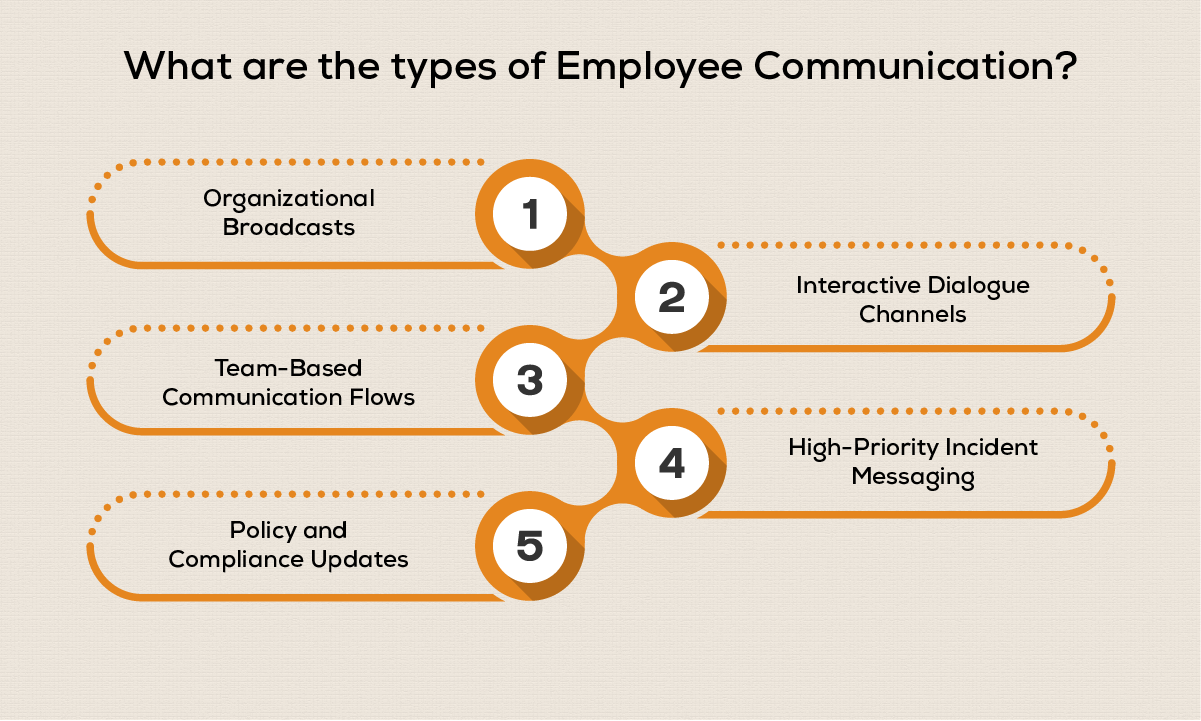
Understanding the different types of communication within an organization helps ensure that the message, medium, and approach are purpose-fit. Each type serves a distinct function and contributes to the overall effectiveness of your strategy.
1. Organizational Broadcasts
One-directional messaging such as leadership announcements, internal newsletters, and formal updates. These are essential for sharing information uniformly across the workforce.
2. Interactive Dialogue Channels
To keep communication effective, it must be a two-way street rather than a top-down broadcast. Using methods like employee surveys, town halls, and digital feedback platforms allows an organization to move beyond just sharing news to actively listening to its people. These formats are essential for surfacing fresh perspectives and identifying concerns early.
3. Team-Based Communication Flows
Peer-to-peer exchanges happen naturally through collaborative tools, informal chats, and project platforms. This type of communication is the engine of daily operations, driving task coordination and ensuring teams stay aligned in real-time. By breaking down silos and encouraging cross-functional teamwork, these informal interactions allow information to move quickly where it is needed most.
4. High-Priority Incident Messaging
In urgent or sensitive situations, communication involves crisis response updates, emergency alerts, and immediate action messages that follow a strictly defined protocol. By delivering clear, accurate information during high-pressure moments, these communications minimize confusion and ensure the entire organization remains coordinated and secure.
5. Policy and Compliance Updates
Compliance messaging includes critical updates such as code of conduct revisions, security training, and workplace policy changes. By delivering these messages clearly and consistently, an organization reinforces its core standards and significantly reduces compliance risks.
Strategic Actions to Strengthen Employee Communication
To build a strategy that truly resonates, communication must be intentional and well-structured. The following actions outline how to turn plans into consistent, meaningful employee dialogue.
- Define Strategic Outcomes
Start with a clear view of what the communication strategy should achieve, whether it’s reinforcing organizational values, accelerating decision-making, or strengthening employee connection to business imperatives. Having defined outcomes creates a consistent reference point for all messaging efforts. - Map Workforce Segments
Understand the different employee groups across the organization by role, location, or work style. A precise audience map allows communication to be tailored so it is relevant, accessible, and timely for every group. - Audit and Optimize Channels
Review current tools and platforms to identify what works and where there are gaps. Build a channel mix that balances immediacy and depth combining digital platforms, collaborative tools, and in-person formats to reach employees in the most effective way. - Establish Communication Standards
Set clear expectations for tone, format, and responsiveness. Document and share these standards so that communication across teams is consistent, professional, and integrated with organizational values. - Build a Messaging Framework and Timeline
Plan the flow of communication through a structured calendar that aligns with organizational goals. This prevents message overload, maintains cadence, and ensures important updates are delivered when they have the greatest impact. - Equip Leaders as Communication Ambassadors
Train managers and senior leaders to deliver messages effectively and listen actively. Equip them with tools, talking points, and techniques to keep their teams informed and engaged. - Track, Review, and Evolve
Measure the impact of communication efforts using defined metrics such as message reach, engagement rates, and feedback insights. Use these findings to refine the strategy, ensuring it remains relevant as organizational needs and workforce expectations change.
Tools to Enhance Employee Communication
Strong communication relies on both well-planned strategies and the right tools to put them into action. Modern, intuitive, and often AI-enabled platforms streamline information flow, remove barriers to access, and make decision-making faster. Below are the key categories of tools that elevate organizational communication.
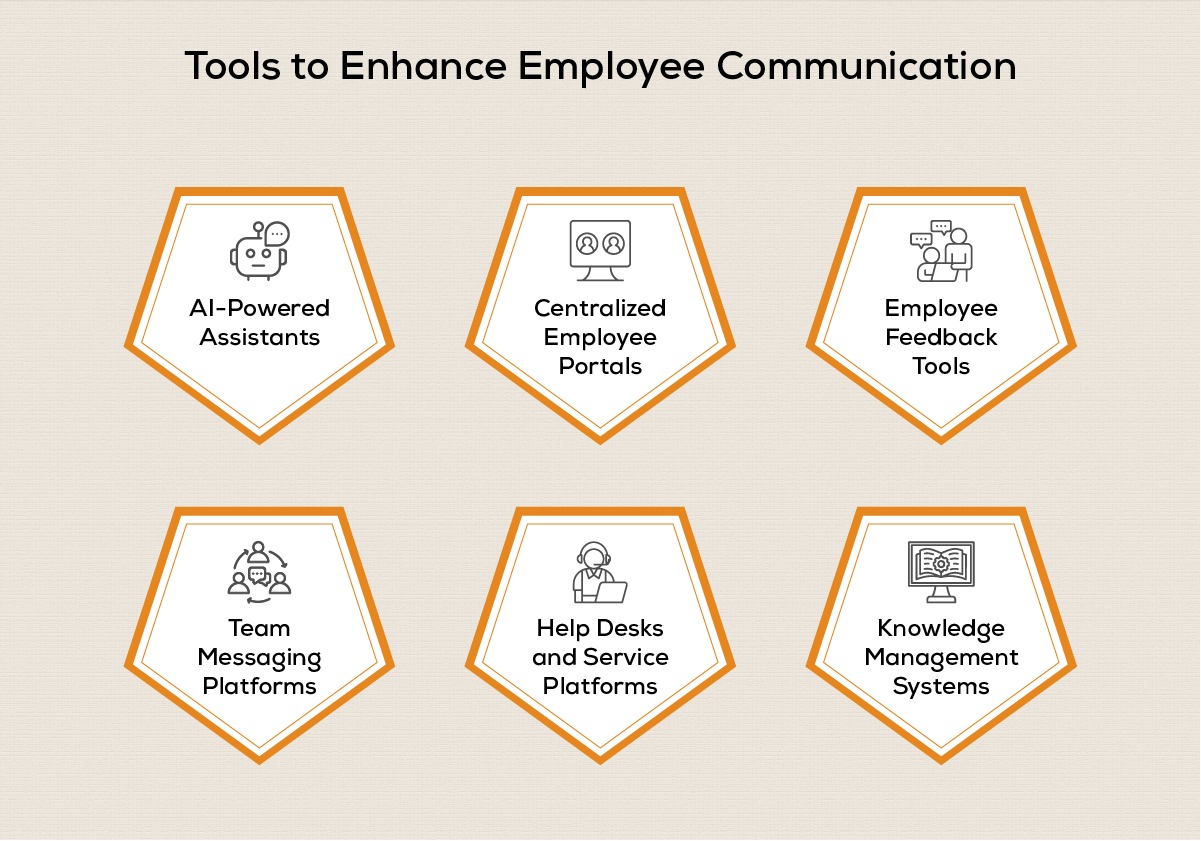
- AI-Powered Assistants
Intelligent virtual agents can respond to employee queries with speed and accuracy, drawing on both organizational knowledge and past interaction patterns. They replicate the responsiveness of HR or IT teams, freeing human staff to focus on more complex tasks. - Centralized Employee Portals
These self-service platforms bring essential resources, FAQs, and support tracking into a single location. Employees can independently access the information they need, reducing the volume of repetitive requests to internal teams. - Employee Feedback Tools
Digital surveys and pulse checks capture real-time insights into communication effectiveness. The data they provide helps identify where messages are landing well and where improvements are needed. - Team Messaging Platforms
Applications like Microsoft Teams or Slack support quick, informal collaboration alongside structured updates. Because they integrate seamlessly into daily workflows, they ensure communication happens where employees are already active. - Help Desks and Service Platforms
Accessible support systems allow employees to log issues, request assistance, and receive timely responses. Automation features extend availability, ensuring support is not restricted by time zones or working hours. - Knowledge Management Systems
Organized repositories for guides, process documents, and FAQs make it easy to locate accurate, current information. AI-enabled knowledge bases can highlight outdated materials and even generate updated content based on provided outlines or topics.
When used strategically, these tools not only improve the speed of communication but also create an environment where employees feel supported, informed, and connected to the organization.
Best Practices for Effective Employee Communication
Strong communication is the result of both thoughtful planning and disciplined execution. It is not defined by how often messages are sent but by how relevant, accessible, and actionable they are. The following practices combine strategic fundamentals with technology-enabled enhancements for maximum impact.
- Prioritize Clarity
Use plain, concise language and avoid jargon. Messages should be easy to understand and leave no room for misinterpretation. - Maintain Consistency
Set a clear cadence for updates and adhere to it. Predictability in communication builds reliability and trust. - Segment and Personalize
Tailor messaging to specific employee groups based on role, location, or seniority, ensuring information is relevant to each audience. - Promote Two-Way Dialogue
Build structured feedback loops through surveys, discussion forums, or open Q&A sessions. Listening should be as deliberate as speaking. - Ensure Mobile Accessibility
Optimize all content for mobile devices so employees can engage with messages anytime, anywhere. - Incorporate Multimedia Formats
Combine text with video, visuals, and interactive content to capture attention and improve retention. - Automate Routine Communication
Use AI to handle recurring queries and document retrieval, allowing HR and support teams to focus on higher-value tasks. - Refine Message Precision with AI
Employ AI-assisted tools to recommend clearer phrasing and tone adjustments, reducing ambiguity. - Enable Meeting Continuity
Organizations can leverage AI-driven transcription and summarization to transform conversations into permanent, searchable assets. - Monitor Sentiment Trends
Use sentiment analysis to identify shifts in employee mood and address potential concerns early. - Measure and Optimize
Track engagement metrics, gather feedback, and adjust strategies based on measurable outcomes.
When combined, these practices create a communication environment that is intentional, inclusive, and responsive where employees are informed and connected to the organization’s priorities and culture.
Conclusion
The most successful organizations approach communication as an evolving process, one that adapts to changing workforce needs, embraces technology responsibly, and values listening as much as delivery. By combining clear principles, tailored messaging, and intuitive tools, leaders can create an environment where information fuels trust and engagement rather than confusion.
In an era of rapid change, the ability to communicate with clarity and empathy is no longer just an operational necessity; it is a vital strategic advantage that drives long-term results.