

Have you ever wondered why teams care so much about how employees feel at work? Or why questions like “Would you recommend this workplace to someone you know?” keep showing up in surveys? There is a simple reason. Organisations want to keep great talent, and experience plays a major role in that effort.
This shift is the reason Employee Experience Management is gaining so much attention. Workplaces want to create an environment where employees feel motivated to stay, contribute, and grow. When employees feel supported and engaged, performance rises and business outcomes strengthen.
To help you build that kind of environment, this article breaks down the essentials of Employee Experience Management, why it matters, and how a well-designed approach can shape organization culture, productivity, and long-term impact.
What is Employee Experience Management?
Employee Experience Management is the way an organisation shapes the everyday moments employees go through, right from onboarding to growth. It focuses on creating a workplace that feels supportive, organised, and easy to navigate. The aim is to understand what employees need, improve how they interact with processes and people while building an environment that encourages them to stay engaged. This often involves close coordination with HR teams to strengthen feedback, recognition, and overall workplace well-being.
Why Employee Experience is Gaining Focus?
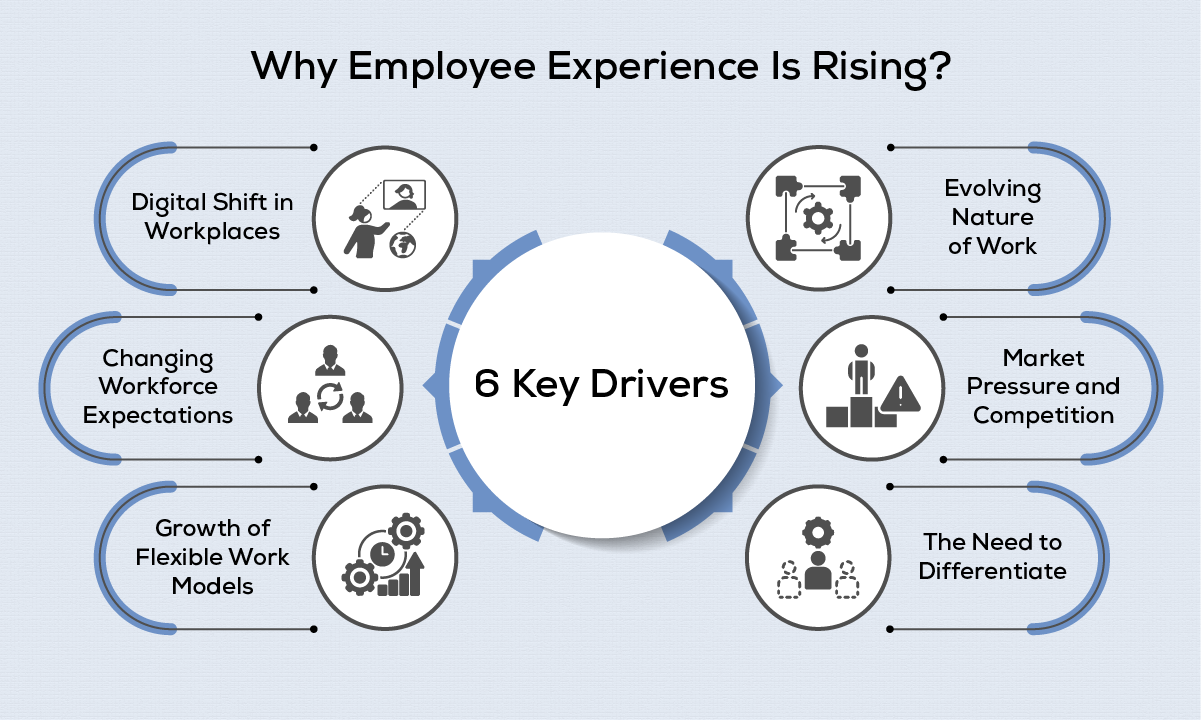
The attention around employee experience has grown steadily as workplaces move through rapid shifts in technology, workforce expectations, and global trends.
Digital Shift in Workplaces
As organisations adopt new digital tools, employees expect smoother workflows, simpler access to information and faster support. The rise of modern HR systems, collaboration platforms and automated processes has pushed companies to pay more attention to the overall experience these tools create.
Changing Workforce Expectations
Younger generations, especially Gen-Zs bring a fresh perspective on work. They look for clarity, growth paths, and workplaces that align with their values. Their expectations influence how organisations communicate, support development, and create environments that keep people engaged.
Growth of Flexible Work Models
With freelance roles, short-term projects, and contract work becoming more common, retaining talent has become more challenging. Organisations now treat experience as a key factor that encourages people to stay committed, even when flexible options are available elsewhere.
Evolving Nature of Work
Remote work, hybrid models, and flatter teams have changed how people connect and collaborate. These shifts require stronger communication practices and thoughtful experience design so employees feel supported, regardless of location.
Market Pressure and Competition
Economic changes and rising competition push organisations to focus on stability and long-term performance. A strong employee experience helps reduce turnover and builds teams that adapt well to shifting priorities, giving companies an advantage.
The Need to Differentiate
A well-designed employee experience software brings stability to everyday work, giving employees a clear reason to join and stay, which strengthens the organisation over time.
What are the Key Stages of the Employee Experience?
The employee experience moves through a few clear stages that influence how people understand their role and connect with the organisation. Each stage helps build clarity and consistency in the workplace.
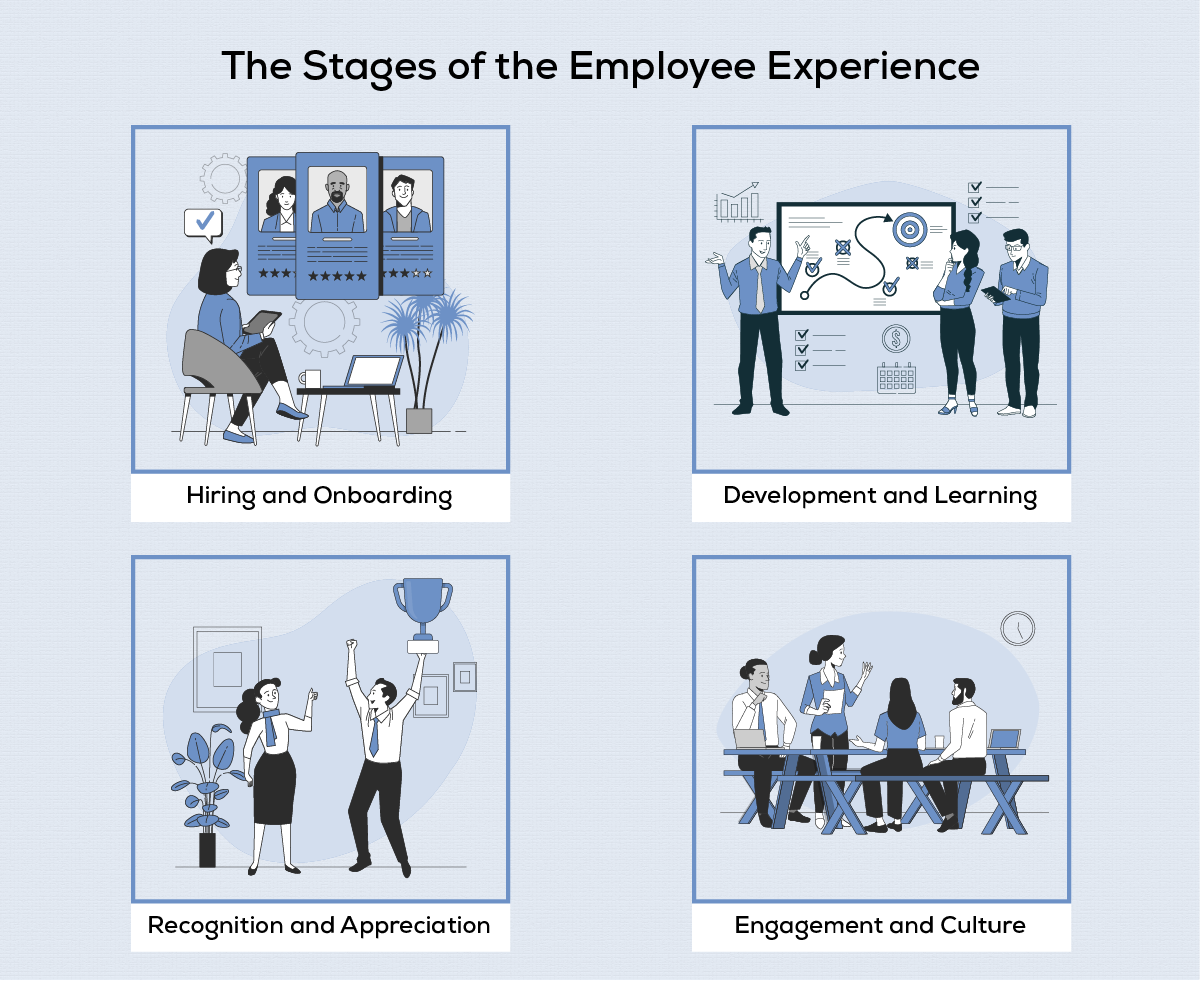
- Hiring and Onboarding
This stage introduces employees to the organisation. A clear hiring process and a steady onboarding plan help new employees understand what the company expects and how they can settle in with ease.
- Development and Learning
Employees progress when they have access to learning support. Training and cross-training sessions, mentorship and simple learning paths help them build skills and grow in their roles.
- Recognition and Appreciation
Recognition signals that effort matters. Regular acknowledgment, whether formal or informal, encourages employees to stay committed and feel valued for their contributions.
- Engagement and Culture
Everyday interactions play a key role in employee engagement and shape the overall work environment. Activities that encourage teamwork and open communication help employees feel connected to the organisation.
What is the Role of an Employee Experience Manager?
An employee experience manager focuses on improving how employees interact with workplace systems and processes. The role brings structure to feedback, employee insights, and experience-related initiatives so the organisation can respond with clarity and consistency. Here are the core responsibilities this role handles:
Translating Employee Insights into Actions
The manager reviews feedback, surveys, and data to identify what needs attention and works with teams to turn those insights into practical improvements.
Designing Experience-Focused Processes
They help refine processes such as new-hire integration, communication flows, or workplace programs so employees experience fewer barriers in their day-to-day work.
Connecting Employees and Leadership
The manager acts as a link between employees and leadership by presenting insights, raising concerns, and proposing solutions that strengthen trust and transparency.
Guiding Experience-Driven Initiatives
From culture activities to digital tool rollouts, the role involves coordinating initiatives that influence how employees interact with their workplace.
Supporting Organisational Changes
When the workplace introduces new systems or structural changes, the manager ensures transitions are smooth and employees feel prepared.
Managing Experience Tools and Platforms
The role requires comfort with HR technology, analytics dashboards, and feedback tools that help track experience trends and measure progress.
Building an Effective Employee Experience Strategy
A strong employee experience strategy gives the organisation clarity on what it aims to improve and how progress will be measured. These strategic pillars help shape a direction that feels practical and adaptable.
Current-state assessment
Begin by understanding how employees experience work everyday. Use simple listening tools or quick discussions to identify what feels smooth and what creates delays or confusion.
Instance: A short weekly pulse reveals that many employees struggle with response times for internal requests, signalling a clear priority area.
Measurable objectives
Set specific targets so the strategy has focus. Objectives keep the organisation aligned on what the experience should improve.
Instance: A goal is set to lift overall employee sentiment by a defined margin within the year, supported by periodic feedback.
Prioritisation and focus areas
Select a few areas to address first rather than spreading efforts too thin. Focus helps build early progress and confidence.
Instance: Instead of tackling multiple pain points, the organisation concentrates on improving clarity in communication because it affects most teams.
Stakeholder alignment and governance
Create a small group responsible for decisions, resources, and regular reviews. This ensures consistency and clear ownership.
Instance: A cross-functional committee meets monthly to track updates, approve next steps, and ensure the plan stays on course.
Technology and data approach
Prioritize tools that streamline feedback and tracking. The goal is to capture meaningful insights without adding to the team's workload.
Instance: A lightweight pulse tool is introduced, and the results are shared in a simple dashboard accessible to all managers.
Pilot and scale
Test initiatives on a smaller group before expanding them. Pilots help refine ideas with minimal disruption.
Instance: A new recognition approach is tried with one department for a quarter; after reviewing steady participation, it becomes part of the wider experience strategy.
Measurement framework
Track the experience using a mix of sentiment indicators and operational metrics. This helps see what’s improving and what needs attention.
Instance: The organisation monitors employee sentiment, response times for internal support and participation in workplace activities to guide future decisions.
Sustainment and continuous refinement
Plan regular check-ins so the strategy evolves with the institution’s needs. Small adjustments keep the experience relevant and effective.
Instance: Quarterly reviews show rising interest in flexible support options, prompting the organisation to adjust its approach accordingly.
How to Overcome Challenges in Employee Experience Management?
Even well-planned experience initiatives come with hurdles. Understanding these challenges early helps organisations respond with clarity and keep the employee experience steady and consistent.
- Addressing Resistance to Change
Employees may hesitate when new systems or processes appear. Clear communication, early involvement and simple explanations about the purpose of each change help build comfort and reduce uncertainty.
- Managing Budget Constraints
Not every experience improvement needs a large investment. Small efforts like regular appreciation, quick feedback channels, or simple engagement activities can create positive impact without high costs.
- Supporting a Diverse Workforce
Employees bring different expectations to the workplace. Flexible policies and considerate practices help ensure the experience feels fair and accessible to everyone.
- Securing Leadership Support
Employee experience strengthens when leaders are aligned with the strategy. Sharing insights, planned outcomes, and progress updates helps maintain consistent leadership backing.
Different Types of Employee Experience Surveys
Surveys provide insight into how employees feel at various points in their journey. Each type serves a specific purpose and helps organisatio ns take informed action.
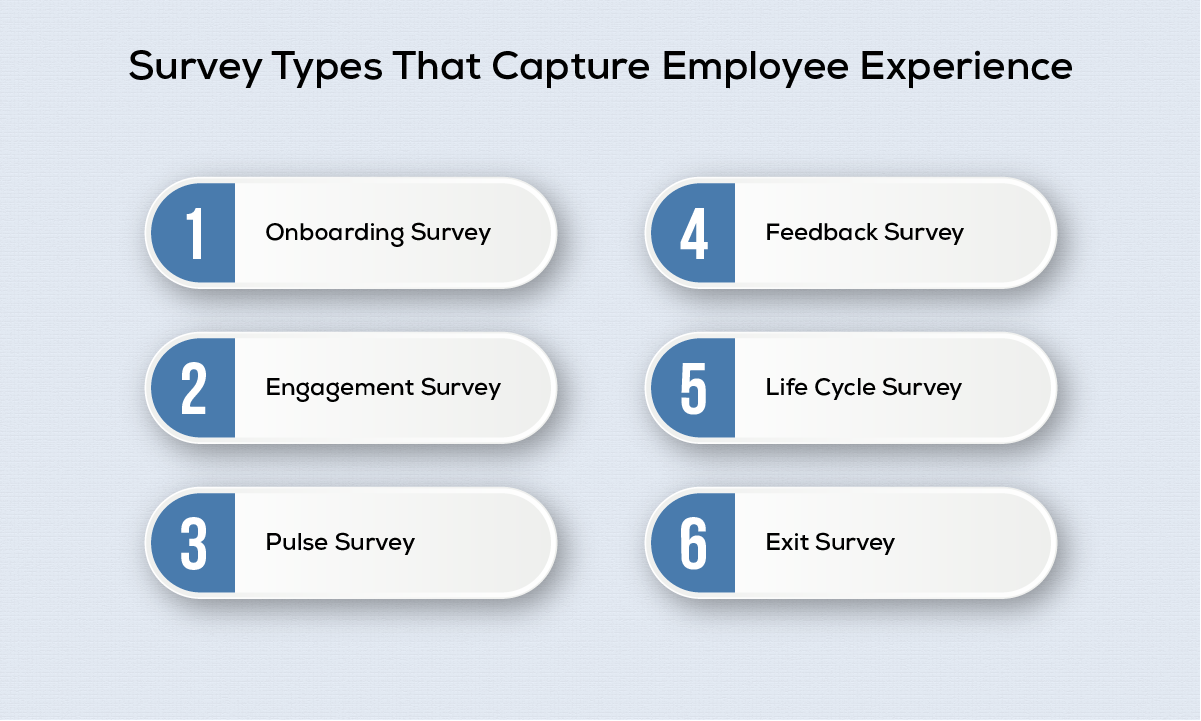
- Onboarding Survey
To capture how new employees experience their first days and weeks. It highlights gaps in orientation, training, and early support.
- Engagement Survey
This survey measures how connected employees feel to their work, teams and organisation. It helps identify what drives energy and what creates friction.
- Pulse Survey
Short and frequent, pulse surveys give quick updates on employee sentiment. They help track changes in mood, satisfaction, or workload over time.
- Feedback Survey
Used at various milestones, this survey collects insights during promotions, role changes, or new initiatives. It shows how employees experience key moments in their journey.
- Life Cycle Survey
This survey looks at how employees feel at each major stage of their employment. It provides a broader view of long-term experience patterns.
- Exit Survey
When employees leave, this survey helps uncover their reasons and identify potential areas that require attention inside the organisation.
Technology in Employee Experience Management
Technology supports a smoother workplace by giving employees easier access to information, quicker responses, and clearer ways to resolve everyday concerns.
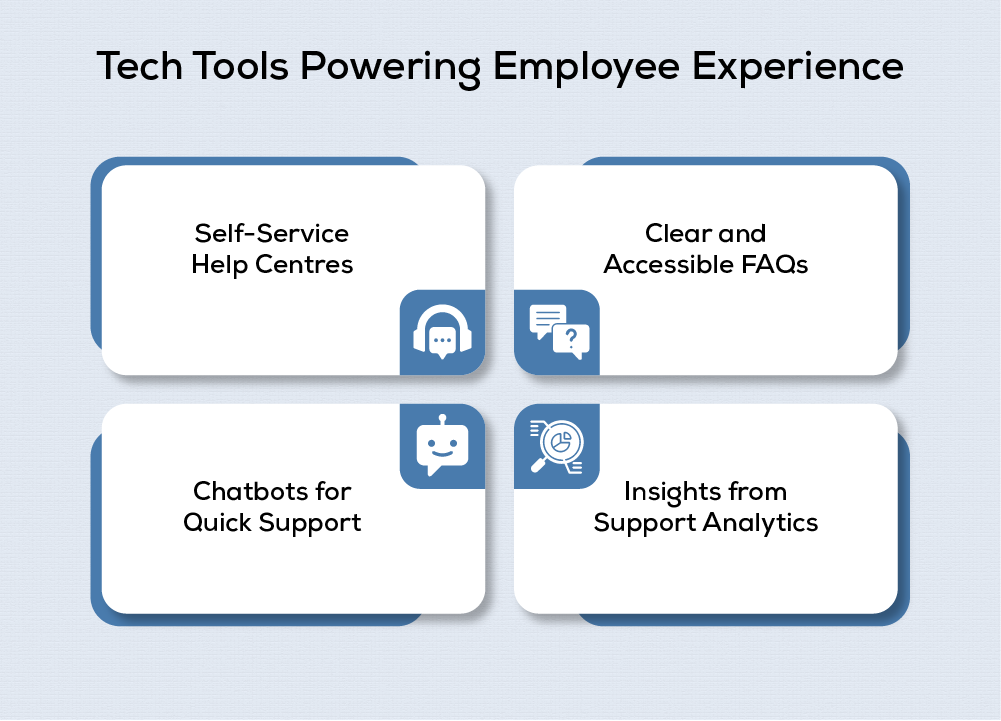
- Self-Service Help Centres
Internal help centres give employees one place to find answers, log requests or track updates. This reduces waiting time and keeps routine queries from piling up on HR or IT teams.
- Clear and Accessible FAQs
FAQ pages help employees understand common policies and processes without needing repeated explanations. This keeps communication consistent and reduces confusion.
- Chatbots for Quick Support
Chatbots handle routine questions and guide employees to the right information, stepping in instantly when someone needs simple clarification. More complex queries get routed to support teams with better context.
- Insights from Support Analytics
Help desks and digital tools capture trends on recurring questions and response patterns. These insights highlight areas that need attention and help organisations refine their internal processes.
Conclusion
Organisations that aim to strengthen employee experience need more than isolated initiatives; they need a workplace where teams feel equipped to do their best work and HR can collaborate across functions with ease. When communication flows smoothly and interactions feel thoughtful, employees gain the clarity they need to stay aligned with organisational goals.
This is where employee experience management becomes a practical advantage. It brings order to everyday processes, reduces friction, and helps employees navigate their work with greater confidence. It is the path to stronger engagement, steadier retention, and a workforce that grows with the organisation instead of away from it.