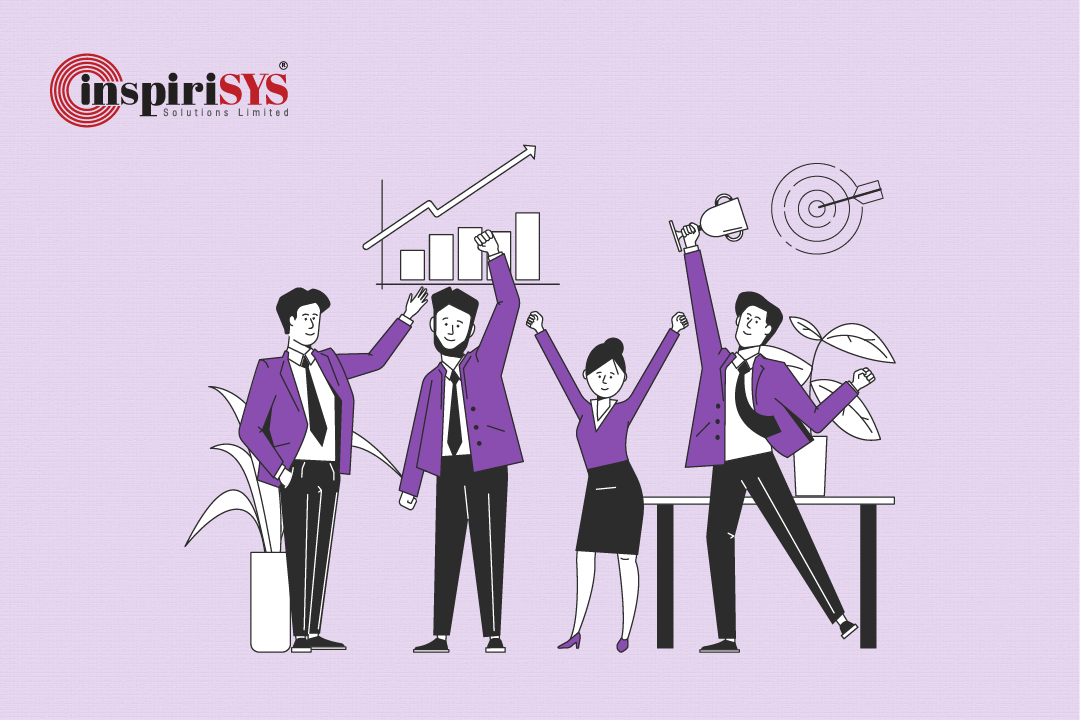
Great teams succeed when individual strengths are actively recognized and utilized. When a problem-solver, a communicator, a detail-checker, and a strategist work in sync, they unlock results that no one could achieve in isolation.
Despite this, many organizations still rely on rigid frameworks that fail to account for individual talents, leading to disengagement and missed opportunities. Shifting toward a strengths-oriented model is now a competitive necessity for any business looking to retain top talent and drive innovation.
This article explores how to build a workplace where strengths are central to development, deployment, and recognition. We will examine practical ways to identify employee potential, strategies to nurture those talents over time, and how leadership can embed this mindset into both everyday culture and long-term strategic planning.
What are Employee Strengths?

Employee strengths are the distinct capabilities, qualities, and inclinations that enable individuals to perform with consistency and impact. These reflect how someone approaches challenges, communicates within teams, makes decisions, or contributes to long-term goals.
When strengths are recognized and nurtured, employees feel more connected to their roles and more confident in their contribution. This builds a workplace where performance improves, collaboration deepens, and people stay invested in what they do.
How to Identify Employee Strengths?
Uncovering employee strengths is a deliberate process that combines observation and structured feedback. It enables leaders to align individuals with work that brings out their best and contributes meaningfully to team performance.
1. Observe Consistent Patterns of Excellence
Pay attention to where employees consistently perform well, solve problems effectively, or show initiative without prompt. These patterns often signal underlying strengths.
2. Use Structured Assessment Tools
Assessment tools provide a data-informed starting point to identify strengths that may not be immediately visible through daily tasks.
3. Engage in Ongoing Conversations
Regular one-on-one check-ins and feedback sessions help uncover where individuals feel most effective and motivated, offering valuable insight beyond formal reviews.
4. Collect Peer and Cross-Functional Feedback
Team members often witness strengths in action, especially during collaboration and problem-solving. Including their input offers a more rounded view of individual capabilities.
5. Treat Strength Identification as a Continuous Process
People grow, roles evolve, and new strengths emerge. Revisit this process regularly to keep development efforts relevant and aligned.
6. Analyze Energy and Engagement Patterns
Observe when employees are most focused, enthusiastic, and proactive. Tasks that energize rather than drain are often linked to natural strengths.
7. Review Stretch Assignments and Crisis Responses
Evaluate how individuals perform during high-stakes or unfamiliar situations. Strengths often surface clearly when routines are disrupted and adaptability is tested.
8. Look at Informal Leadership Moments
Not all strengths are tied to formal roles. Notice who others turn to for guidance, who mediates conflict, or who steps up without being asked.
9. Study Career Histories and Aspirations
Past roles, side projects, and professional interests often reveal patterns in how individuals like to contribute and where they are most effective.
10. Encourage Self-Reflection Exercises
Invite employees to reflect on their proudest work moments, what tasks they lose track of time doing, or when they’ve felt most useful. These insights are often revealing.
What are Different Types of Employee Strengths?
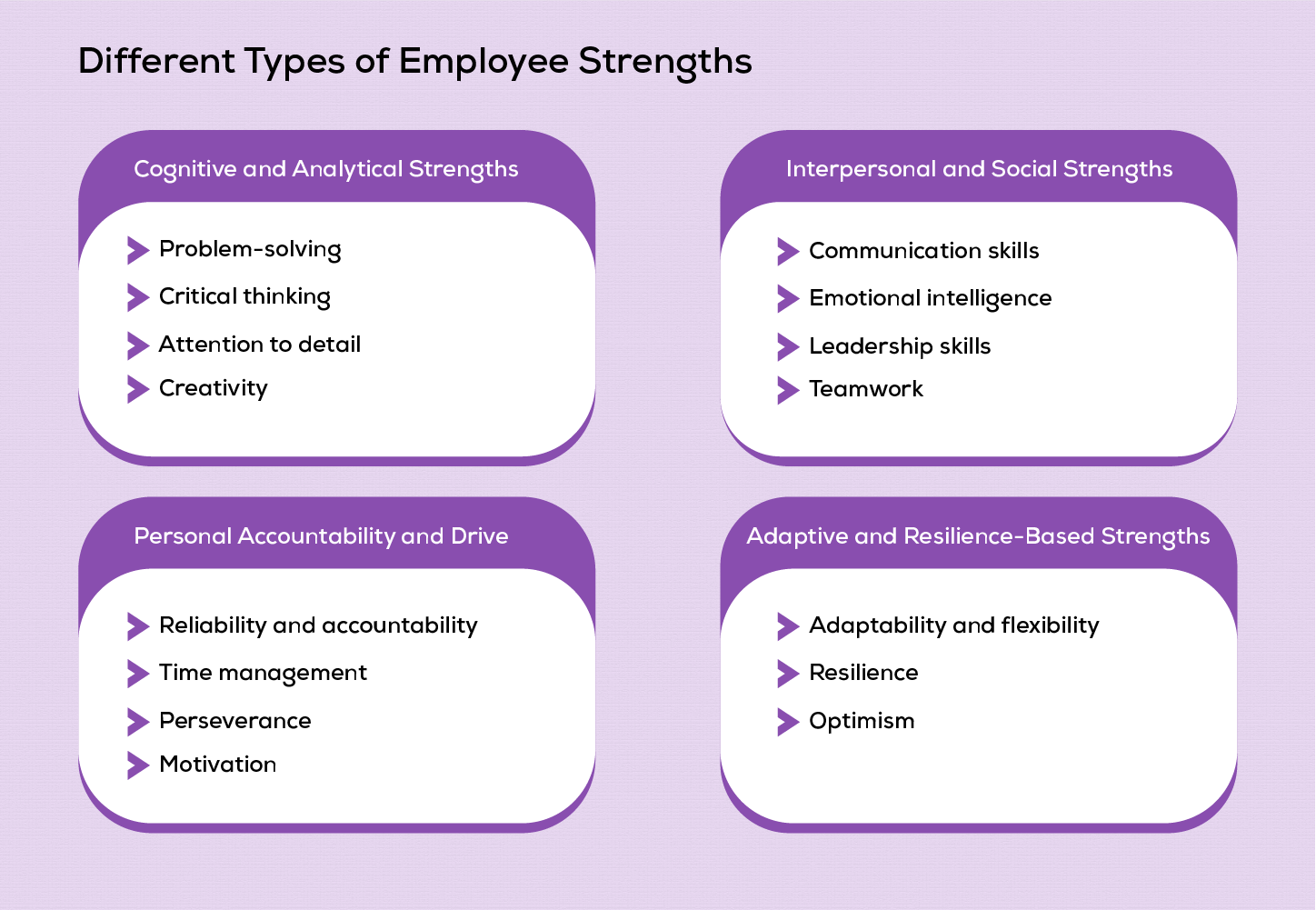
Employee strengths can be better understood when grouped into core categories. This approach helps organizations recognize not only what an individual does well, but how their strengths align with broader business needs. Below are four primary categories of strengths relevant across industries, each accompanied by examples and explanations.
1. Cognitive and Analytical Strengths
These reflect how employees approach problems, process information, and make decisions.
- Problem-solving: The ability to resolve challenges with clarity and speed, often combining multiple skills to move work forward.
- Critical thinking: The habit of evaluating options objectively, considering different perspectives, and avoiding assumptions.
- Attention to detail: A focus on accuracy and precision, especially where errors can lead to significant risk or rework.
- Creativity: The capacity to generate new ideas or approaches that improve processes, products, or outcomes.
2. Interpersonal and Social Strengths
These are the qualities that define how individuals communicate, collaborate, and lead within teams.
- Communication skills: Clear, purposeful exchange of information that minimizes misunderstanding and improves alignment.
- Emotional intelligence: The ability to manage one’s emotions and understand those of others, building healthy relationships and workplace stability.
- Leadership skills: Inspiring and guiding others toward shared objectives through influence, and clear direction.
- Teamwork: Active contribution to group efforts, balancing individual accountability with team priorities.
3. Personal Accountability and Drive
These strengths relate to self-management, discipline, and a commitment to delivering consistent results.
- Reliability and accountability: Following through on commitments, owning outcomes, and building trust through dependability.
- Time management: Efficiently organizing and executing tasks within defined timelines.
- Perseverance: Staying focused and committed to a task despite challenges or repeated setbacks.
- Motivation: Sustaining energy and effort, whether driven by internal satisfaction or external goals.
4. Adaptive and Resilience-Based Strengths
These qualities enable employees to stay effective in dynamic or high-pressure environments.
- Adaptability and flexibility: Adjusting quickly to new conditions, roles, or tools without losing momentum.
- Resilience: Recovering from difficulties and maintaining progress even when circumstances are unfavourable.
- Optimism: Encouraging a forward-looking mindset that promotes stability and motivation, especially during uncertainty.
How can Development Areas be Turned into Strengths?

While building on employee strengths drives performance, addressing areas of weakness remains essential to well-rounded development. The goal isn’t to eliminate weaknesses, but to convert them into capabilities that support stronger, more balanced contribution over time.
1. Identify Development Areas with Precision
Use the same tools applied for strength identification, performance reviews, feedback loops, and assessments to surface patterns that signal gaps. These insights provide a clear starting point for targeted development.
2. Reframe Weaknesses as Growth Opportunities
Position gaps not as shortcomings, but as areas with potential for progress. This shifts the focus from deficiency to development, helping employees stay engaged rather than defensive.
3. Deliver Targeted Learning Interventions
Offer structured training aligned with identified needs. Whether through in-house programs, curated digital learning paths, or AI-driven platforms ensure that development is timely, relevant, and outcome-focused.
4. Pair Strengths with Complementary Learning
Connect employees with peers or mentors whose strengths align with the areas others are developing. This approach enables real-time learning and reinforces a culture of collaboration.
5. Recognize and Reinforce Improvement
Track progress and acknowledge visible growth. Regular, specific feedback motivates employees to continue building new capabilities and deepens their investment in learning.
What Tools Help in Assessing Employee Strengths?
Accurately identifying employee strengths requires more than observation. Structured tools provide insights that are consistent, data-driven, and scalable across teams. Below are widely used tools that help organizations surface and understand individual strengths.
1. CliftonStrengths
Previously known as StrengthsFinder, this tool helps individuals identify their top talent themes across four domains: strategic thinking, relationship building, influencing, and executing. It’s widely used for leadership development and team alignment.
2. VIA Character Strengths Survey
This free, psychology-based assessment highlights 24-character strengths like honesty, curiosity, and perseverance. It’s often used for personal growth and team-building initiatives.
3. 360-Degree Feedback Tools
These platforms collect performance input from peers, managers, and direct reports to provide a well-rounded view of where strengths show up in practice. Tools like Lattice, Culture Amp, or Qualtrics often include 360-feedback modules.
4. DISC Personality Assessment
DISC profiles categorize behavioural styles into Dominance, Influence, Steadiness, and Conscientiousness. Understanding these traits helps leaders align roles and communication styles with individual preferences.
5. Gallup Q12 Engagement Survey
Though focused on engagement, this tool indirectly surfaces strength areas through questions about clarity, recognition, and growth, each linked to how well strengths are being used at work.
6. Manager-Led Assessments and Role-Based Reviews
Regular performance check-ins and role-specific evaluations allow managers to assess how well individuals apply their strengths in day-to-day tasks, offering a more contextual understanding than standard assessments.
How can Organizations Build Strength-Based Workplaces?
Building a strength-based workplace begins with recognizing what individuals naturally do well and structuring roles, teams, and development plans around those capabilities. Beyond alignment, the real advantage lies in sustaining growth. This means offering development that builds on existing strengths while addressing gaps without diminishing confidence. With the right strategy and support systems, organizations can unlock deeper engagement and longer-term retention.