


Every organization holds more data about its workforce than it often realizes. From the moment a candidate applies for the job to the day an employee exits, information moves through multiple systems, departments, and decision points. Often embedded in routine processes, this data carries strategic relevance that is easy to overlook.
When this information becomes fragmented, outdated, or misused, the consequences ripple across operations. But when it is managed with structure and foresight, it becomes a tool for clarity, consistency, and action.
This shift in value has placed Employee Data Management at the centre of how organizations run and grow. Its role now extends beyond recordkeeping, influencing trust, decision-making, and long-term resilience. This article examines why managing employee data requires greater attention and how organizations can approach it with purpose and precision.
What is Employee Data Management?

Employee Data Management allows organizations to systematically handle the vast amount of information generated by an employee, covering everything from their initial job application and onboarding process to post-exit archiving. It ensures that every data point, whether administrative or sensitive, is collected, stored, and maintained in a way that supports operational clarity and strategic planning.
The range of data managed is extensive: identity records, employment contracts, payroll details, leave balances, performance feedback, benefits, and exit documentation. Each type of data has its own retention timelines, security requirements, and relevance to business operations.
The complexity lies in the responsibility of maintaining this data, especially when regulatory mandates are involved. Managing employee data requires continuity, transparency, and well-defined controls across systems and teams.
This makes a strong case for formalized data practices, where accuracy, accountability, and access are treated as business priorities rather than administrative tasks.
Employee Data Management Roles and Responsibilities
Effective employee data management cannot be delegated to a single function or team. It demands a cross-functional effort that integrates HR expertise, compliance oversight, data governance, and IT security. Each stakeholder plays a distinct role in maintaining the integrity, security, and usability of workforce data.

1. Data and HRIS Teams
The foundation of any structured employee data system lies in the work of the Data and HRIS (Human Resources Information Systems) teams. These teams lead the configuration, maintenance, and optimization of digital platforms used to collect, store, and analyze employee data.
Their responsibilities include:
- Implementing data architecture that supports integration across systems.
- Standardizing data formats and access protocols.
- Monitoring data quality and resolving discrepancies.
As employee data continues to scale across platforms and geographies, the role of HRIS becomes increasingly central to ensuring data reliability and continuity.
2. Human Resources Team
HR professionals remain the closest custodians of employee data in daily operations. They interact with sensitive material across multiple touchpoints.
Key roles within HR include:
- HR Specialists: Tasked with entering, updating, and validating employee records, they ensure that the data remains current, complete, and compliant with internal policies.
- Employee Relations Specialists: They serve as liaisons between the organization and its workforce on data-related matters, addressing employee concerns about privacy and ensuring clear communication around data practices.
HR’s involvement is not limited to administration. Their understanding of context, policies, and employee engagement helps translate data into actionable workforce insights.
3. Compliance Officer
With data privacy regulations becoming more stringent, the role of the Compliance Officer has grown in both scope and significance. This role ensures that all employee data practices align with applicable laws such as GDPR, HIPAA, or CCPA.
Key responsibilities include:
- Conducting periodic audits with regulatory requirements.
- Reviewing data collection, retention, and deletion practices.
- Enforcing consent protocols and access controls.
Their oversight helps reduce legal exposure and builds confidence in the organization’s commitment to ethical data use.
4. Security Officer
Securing employee data is a continuous responsibility, and it extends far beyond firewalls. The Security Officer leads the implementation of policies and tools designed to prevent unauthorized access, mitigate breach risks, and monitor potential vulnerabilities.
Their responsibilities include:
- Defining access levels and user authentication mechanisms.
- Overseeing encryption standards and secure data transfer protocols.
- Conducting regular security assessments.
Given the rise in cyber threats targeting HR systems, this role is pivotal to preserving both data integrity and organizational reputation.
5. Training Manager
Even the most robust systems fail without skilled personnel. The Training Manager ensures that HR and other relevant teams are equipped with the knowledge to handle employee data responsibly.
This includes:
- Delivering training programs on data protection policies.
- Reinforcing best practices for secure data handling.
- Collaborating with Compliance and Security teams to keep staff updated on regulatory and technological changes.
In many organizations, the Training Manager plays a key role in embedding a culture of data awareness across functions.
Types of Employee Data
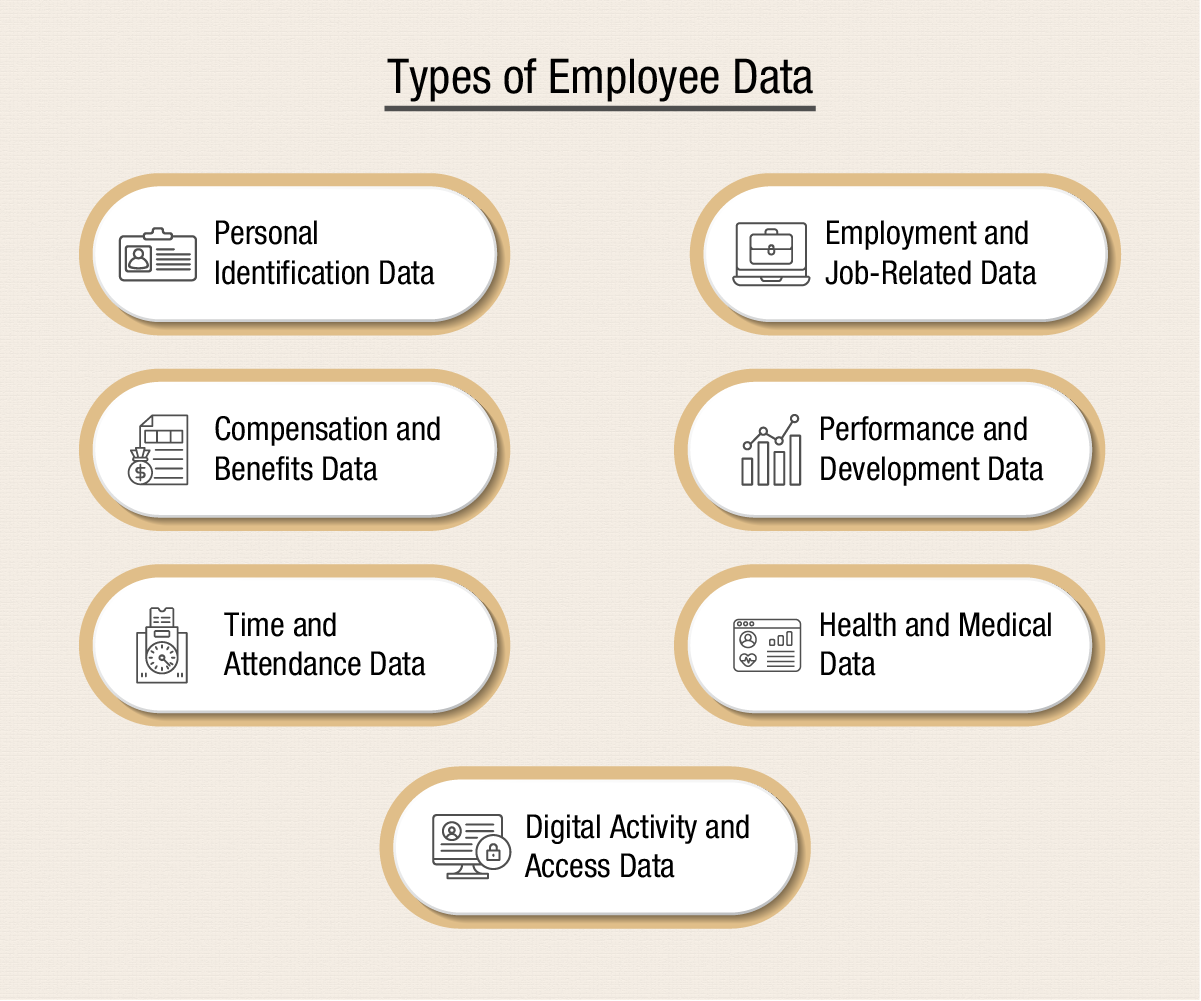
Understanding the different categories of employee data is essential for building a sound data management framework. Each type requires distinct handling practices, shaped by legal, operational, and technological considerations.
Personal Identification Data
This foundational category includes details such as full name, date of birth, national ID numbers, contact details, and emergency contacts. It supports verification processes, internal record-keeping, and alignment with national labour and immigration laws.
Employment and Job-Related Data
Records that reflect an employee’s role within the organization include employment contracts, job titles, reporting structures, departmental assignments, and the history of transfers or promotions. These records are essential data for organizational planning and HR operations.
Compensation and Benefits Data
Salary structures, tax information, incentive payouts, retirement contributions, and insurance coverage fall under this category. Accurate management of this data ensures smooth payroll processing and adherence to financial and benefits-related regulations.
Performance and Development Data
Data in this category captures performance reviews, feedback cycles, training completions, skill certifications, and disciplinary records. It supports talent development strategies, succession planning, and decisions tied to employee growth and contribution.
Time and Attendance Data
This includes working hours, leave balances, overtime, shift schedules, and absenteeism logs. Proper handling of this data supports payroll, planning, and adherence to labour laws.
Health and Medical Data
Collected primarily to meet legal obligations or ensure workplace safety, this may include pre-employment health assessments, disability disclosures, injury reports, or documentation related to medical leave. Such data must be managed with enhanced privacy safeguards.
Digital Activity and Access Data
With the rise of remote work, organizations increasingly track system access logs, software usage, communication records, and device activity. This data helps monitor digital security, manage remote workflows, and ensure appropriate use of organizational resources.
Benefits of Employee Data Management
The value of employee data increases when it is consistently structured, secured, and accessible. The following benefits reflect why managing it well is a business imperative.
- Time Efficiency
Automated data handling significantly reduces manual input, accelerates access to employee records, and streamlines reporting, freeing HR teams to focus on higher-value work.
- Workforce Clarity
Centralized data offers a complete and real-time view of the workforce, helping leaders understand talent distribution, performance history, and career progression across roles and departments.
- Compliance Assurance
Structured data systems support adherence to data privacy laws and internal policies, lowering the risk of regulatory breaches and penalties while strengthening audit readiness.
- Insight Generation
Structured data makes it possible to identify patterns in attrition, engagement, and employee behaviour. These insights enable more targeted interventions, effective workforce planning, and decisions rooted in evidence rather than assumptions.
- Operational Agility
Reliable data systems enable faster, more confident decisions across HR and business functions, enhancing adaptability in hiring, planning, and organizational change.
Best Practices in Employee Data Management
Adopting the right practices in employee data management enables organizations to maintain control, improve data quality, and drive smarter workforce decisions. The following practices help establish a reliable, compliant, and scalable data management environment.
- Assess Existing Data
Begin by auditing the data already in place. Understand what types of employee data are collected, how they’re gathered, and where they’re stored. This process helps identify redundancies, outdated records, and gaps in coverage. Incorporating validation tools during this stage ensures the dataset is clean and usable, minimizing errors that could compromise decision-making.
- Define Clear Objectives
Managing employee data effectively requires alignment with specific business goals. Whether the focus is retention, or workforce planning, clearly defined objectives determine which data matters most. As organizational needs evolve, goals should be reviewed and refined to ensure ongoing relevance and impact.
- Categorize Data
Organizing data into defined categories such as compensation, tenure or training improves retrieval speed and enables more targeted analysis. Categorization improves reporting accuracy and helps teams zero in on specific workforce patterns. It also supports integration of diverse data sources, which can reveal deeper insights when examined collectively.
- Limit Access
Restricting access to employee data is fundamental to protecting privacy. Implement role-based access controls that limit data visibility to only those who require it. This reduces the risk of breaches while maintaining transparency for authorized users, balancing security with operational flexibility.
- Adopt Purpose-Built Tools
Manual processes are prone to errors and inefficiencies. Deploying dedicated data management platforms enables automation of data collection, updates, validation, and analysis. These tools provide a unified view across systems, reduce administrative overhead, and support advanced analytics that guide strategic workforce decisions.
- Equip Teams with Training
The effectiveness of any data system depends on the people using it. Offer practical training to HR and data teams on how to manage, secure, and interpret employee data. Cover topics such as data handling protocols, privacy regulations, and ethical usage. A well-trained team reduces risks and guarantees consistent data quality across functions.
Conclusion
Employee data management is a strategic asset that drives smarter decisions, clearer planning, and bulletproof compliance. With AI-powered tools in the mix, organizations can cut through manual busywork, streamline data handling, and surface insights exactly when they're needed. The result? HR teams that can keep pace with workforce demands.
But getting there requires more than good intentions.
What’s needed is a clear practice, assigned ownership, and data systems that align with what the business is trying to accomplish. When these pieces come together, HR leaders can spot trends before they become problems, make decisions backed by solid data, and operate with real confidence.
Responsible data management builds trust. When employees know their information is handled with care and purpose it reinforces fairness and transparency across the organization.