

One of the most important contributors to organizational resilience is succession planning. As businesses grow, evolve, and restructure, leadership transitions become a natural part of progress. When handled deliberately, these transitions can strengthen continuity, reinforce culture, and sustain momentum across the organization.
A useful way to think about this is through a relay race. Success depends not only on how fast each runner moves, but on how smoothly the baton is passed. The exchange requires preparation, trust, and coordination. In organizations, that baton represents leadership responsibility. When transitions are planned and supported, teams maintain their rhythm and direction, even as roles change.
Effective succession planning ensures that leadership continuity is not left to chance. It prepares people, defines pathways, and aligns future talent with strategic goals.
What is Succession Planning?
Succession planning is a strategic discipline that focuses on identifying critical roles across the organization and building a steady pipeline of talent ready to take them on. It’s not limited to preparing successors for the executive tier. It extends across functions and levels, ensuring that no key position is left exposed during transitions, whether expected or sudden.
At its core, succession planning is about readiness. It aligns internal talent development with future business needs, preparing individuals not only to step into new roles but to lead effectively through change.
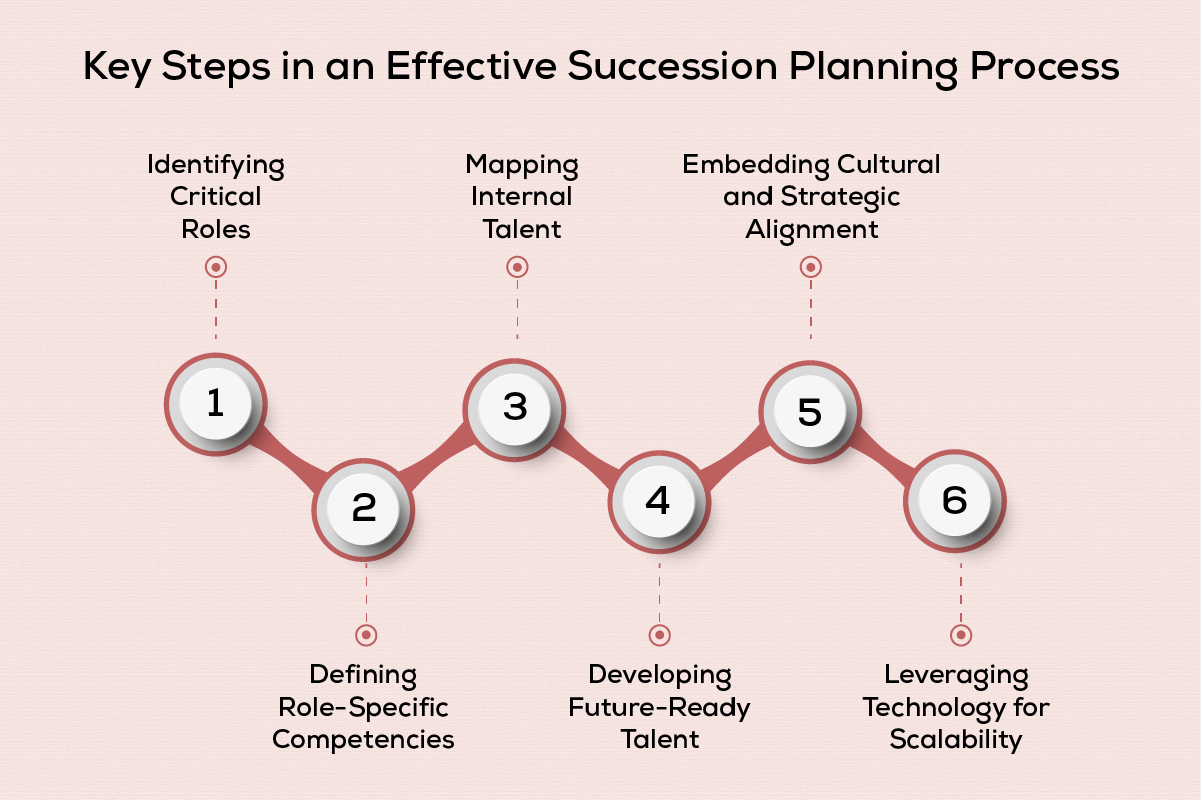
Key Steps in an Effective Succession Planning Process
Rather than relying on reactive decisions during transitions, a well-defined framework supports long-term stability and aligns talent development with strategic goals.
Organizations may implement multiple succession plans across different business units or levels, depending on the complexity and scale of operations. Regardless of scope, the following core elements form the foundation of an effective succession planning process:
- Identifying Critical Roles:
The first step is to determine which roles have the greatest impact on business continuity. These are positions where a sudden vacancy would disrupt operations, delay execution, or compromise key initiatives. Succession planning should begin by mapping out these high-impact roles across senior leadership, technical functions, and operational management.
- Defining Role-Specific Competencies:
Each role demands a unique combination of technical skills, leadership capabilities, and behavioural attributes. Clearly outlining these requirements enables organizations to assess talent readiness and align development efforts. This step is essential for building a transparent and objective foundation for future appointments.
- Mapping Internal Talent:
With key roles and requirements defined, the next step is identifying internal candidates who show potential to step into those positions. The evaluation must assess current high performance and future potential for growth. Identify individuals who not only deliver against today's expectations but possess the adaptability, learning velocity, and ambition needed to rise to the inevitable challenges ahead. It’s often beneficial to consider multiple potential successors for a single role and identify candidates who may be suited for a range of future opportunities. This broadens the internal talent pool and reduces succession risk.
- Developing Future-Ready Talent:
Identifying potential is not enough. Structured development programs, such as stretch assignments, mentorship, cross-functional projects, and targeted upskilling, prepare employees for increased responsibility. These initiatives accelerate learning, close capability gaps, and ensure successors are ready when the opportunity arises. Career pathing also plays a role in succession planning by giving employees visibility into their growth trajectory and helping organizations align career ambitions with strategic needs.
- Embedding Cultural and Strategic Alignment:
Succession decisions should reflect more than skill fit. They must also align with the organization’s leadership culture, values, and long-term direction. Involving senior leaders in the evaluation and development process ensures that talent choices support broader business goals and reinforce the company’s identity.
- Leveraging Technology for Scalability:
Modern succession planning relies on data-driven tools that help track readiness, monitor development, and manage transitions across multiple roles. Technology platforms integrated with talent management systems enable real-time visibility into succession pipelines, while AI enhances decision-making by identifying skill gaps and predicting development timelines. Digital tools make it possible to scale succession planning across the organization for emerging leaders and specialized roles as well.
By embedding this process into workforce planning, businesses are better prepared to respond to change and maintain leadership continuity across every level.
Benefits of Succession Planning

When applied effectively, succession planning strengthens organizational stability, empowers talent development, and enhances long-term performance. Below are the key benefits it brings to both businesses and employees:
- Business Continuity
Succession planning ensures that critical roles are filled without delay, minimizing operational risk during leadership transitions. It helps maintain workflow, decision-making, and team performance even in the face of unexpected vacancies.
- Internal Mobility
By creating clear advancement pathways, succession planning supports upward movement within the organization. It encourages employees to grow their careers internally, reducing the likelihood of losing high performers to external opportunities.
- Cost Efficiency
Investing in internal talent development reduces the need for expensive external hires. It cuts recruitment, onboarding, and training costs, reallocating resources toward upskilling and leadership preparation.
- Career Development
Structured succession strategies provide employees with opportunities for professional growth. Career pathing, training, and mentorship increase motivation, strengthen skill sets, and help retain ambitious talent.
- Knowledge Transfer
Mentorship built into succession planning facilitates the transfer of institutional knowledge. Experienced leaders guide their successors, reducing learning curves and preserving critical insights across transitions.
- Employee Engagement
Employees who see future opportunities within the organization are more engaged and committed. Succession planning improves job satisfaction, fosters loyalty, and helps build a more resilient workforce.
- Strategic Talent Alignment
Succession planning integrates with HR strategy to align talent development with business goals. It ensures leadership pipelines reflect the organization’s values, and future direction.
- Leadership Readiness
Future leaders emerge with a deeper understanding of the business and its priorities. Succession planning accelerates leadership readiness and ensures a consistent management approach across generations.
Challenges in Succession Planning

While succession planning is a strategic priority, its execution often runs into roadblocks. These challenges can stall momentum, limit visibility, and weaken leadership pipelines if not addressed early.
- Leadership Resistance
When leaders hesitate to delegate or prepare others for their roles, it creates bottlenecks in knowledge transfer. This limits succession depth and delays readiness across teams.
- Talent Visibility Gaps
Siloed structures prevent talent from being seen beyond departmental lines. As a result, strong candidates are often overlooked simply because they operate outside the spotlight.
- Unequal Development Access
Without a structured, inclusive process, succession decisions tend to favor those already visible to leadership. This risks reinforcing bias and narrowing the diversity of future leadership.
- Lack of Stakeholder Buy-In
If senior leaders don’t view succession planning as part of business strategy, efforts remain disconnected from long-term goals. The result is often low engagement and limited execution.
- Resource Limitations
Limited time, budget, or HR capacity can stall succession initiatives. Without dedicated support, development plans remain patchy, and readiness gaps widen over time.
- Uncertainty in Planning
Rapid shifts in business direction make future planning feel speculative. But without a flexible framework in place, organizations remain vulnerable when change does arrive.
Best Practices for Effective Succession Planning

Successful succession planning involves thoughtful design, consistent development, and long-term alignment with business goals. These best practices help organizations build a succession strategy that is scalable, inclusive, and future-ready.
- Start Early and Plan Ahead
Succession planning should begin well before a role becomes vacant. Anticipating leadership needs in advance allows enough time to identify, assess, and prepare internal talent without rushing transitions. This proactive approach safeguards continuity and reduces risk.
- Structure Development with Intent
Leadership readiness doesn’t happen by chance. Invest in formal development programs that combine coaching, real-world assignments, and leadership training. Structure these experiences around the specific skills and behaviours required for future roles.
- Personalize Growth Pathways
High-potential employees have unique goals, strengths, and learning styles. Use data-driven insights to design individual development plans that align with both the employee’s aspirations and the organization’s leadership needs. Personalized paths increase engagement and retention.
- Embed Succession into Talent Strategy
Integrate succession planning into your broader workforce planning and performance management processes. When it becomes part of how the organization thinks about growth and capability building, succession planning gains consistency and long-term impact.
- Track Progress and Adjust Regularly
Monitor the development of potential successors and revisit succession plans at regular intervals. Roles evolve, business needs shift, and people grow. Keeping plans updated ensures relevance and responsiveness to change.
Conclusion
Succession planning is ultimately a discipline in foresight and organizational design. It reflects how deliberately a company builds continuity into its operations, not by predicting who will leave, but by preparing for what the business will need next.
Rather than focusing on filling vacancies, effective succession strategies focus on building capacity. They challenge leaders to think beyond individual roles and consider how knowledge, judgment, and decision-making are transferred over time. This shift from role-based planning to capability-based planning is what positions an organization to lead with consistency across cycles of change.
In environments defined by complexity, stability comes from preparation. The organizations that invest in this preparation will find themselves better equipped to adapt, not because they avoided disruption, but because they were built to absorb it.