
Compliance automation is becoming a core part of how organizations manage regulatory requirements, risk visibility, and operational efficiency. As regulatory frameworks expand and digital ecosystems grow, businesses are expected to maintain consistent compliance while keeping processes structured and audit-ready.
Compliance today involves managing multiple standards, coordinating across teams, and maintaining continuous documentation across systems. It is no longer a periodic activity but an ongoing process that requires alignment between policies, controls, and operational practices.
This guide provides a step-by-step approach to implementing compliance automation, from assessing your current maturity level to selecting the right tools, building automated workflows, and measuring performance over time.
What is Compliance Automation?
Compliance automation replaces repetitive, error-prone work with automated workflows, continuous monitoring and integrations that pull data directly from your systems. This allows organizations to maintain ongoing compliance rather than scrambling for documentation only during audits. Instead of gathering evidence in spreadsheets, sending repeated reminders, or manually tracking control status across frameworks, automation tools handle these steps for you, accurately, consistently, and in real time.
Modern compliance automation platforms include capabilities such as:
- Automated evidence collection from systems like HRIS, cloud infrastructure, and identity providers
- Continuous control monitoring to detect risks and misconfigurations as they occur
- Policy and control mapping across multiple frameworks (SOC 2, ISO 27001, HIPAA, GDPR, etc.)
- Centralized dashboards for audit readiness and real-time compliance status
- Workflow automation for tasks, approvals, tests and remediation
By leveraging these core pillars of automation, from direct API integrations to real-time risk detection, platforms like Komply360 eliminate the manual compliance that drains your team's productivity. The result is a frictionless experience where evidence is gathered in the background, allowing you to focus on innovation while it handles the integrity of your controls.
Benefits of Compliance Automation
Compliance automation reshapes how organizations manage and track compliance across systems and teams. The following benefits highlight these changes in practice.
-
Accuracy and Data Integrity
Compliance data is captured directly from source systems, reducing inconsistencies and ensuring records remain dependable across audits and reporting cycles.
-
Consistent Control Execution
Controls are applied in a consistent manner across teams and locations, removing variation in how compliance activities are carried out and reviewed.
-
Centralized Visibility
Teams can track the status of controls, evidence, and actions in one place, enabling better oversight and quicker decision-making.
-
Faster Audit Readiness
With evidence and documentation continuously aligned, audit requests can be addressed without last-minute coordination or disruption to ongoing work.
-
Scalable Compliance Operations
As organizations expand, automation supports increasing compliance requirements without requiring proportional increases in effort or coordination.
-
Improved Accountability
Defined workflows and ownership tracking ensure that responsibilities are clearly assigned and activities are completed within expected timelines.
Common Challenges in Compliance Automation
While compliance automation brings structure to operations, organizations often encounter challenges that can slow adoption or impact outcomes if not addressed early.
- Limited Internal Alignment
Teams accustomed to manual processes may not immediately align with automated approaches. Without clear direction, compliance activities can remain fragmented, leading to inconsistent execution and delays in meeting requirements.
- Data Silos
When compliance data is spread across multiple tools and departments, it becomes difficult to maintain a consistent view of controls and activities. This fragmentation can result in duplicated efforts, inconsistent records, and reduced operational clarity.
- Unstructured Processes
Implementing automation without clearly defined processes can carry forward inefficiencies into automated workflows. This often leads to confusion in execution, inconsistent outcomes, and difficulty in maintaining control integrity.
- Regulatory Volatility
Frequent updates in regulatory requirements can make it challenging to maintain alignment across controls and documentation. Without a structured approach, organizations may struggle to keep compliance efforts current and consistent.
Steps to Automate your Compliance
Organizations need clarity on their current processes, the goals they want to achieve, and the systems that will support them. The steps below outline a practical path for building an automated compliance program that reduces manual effort, strengthens oversight and supports ongoing regulatory demands.
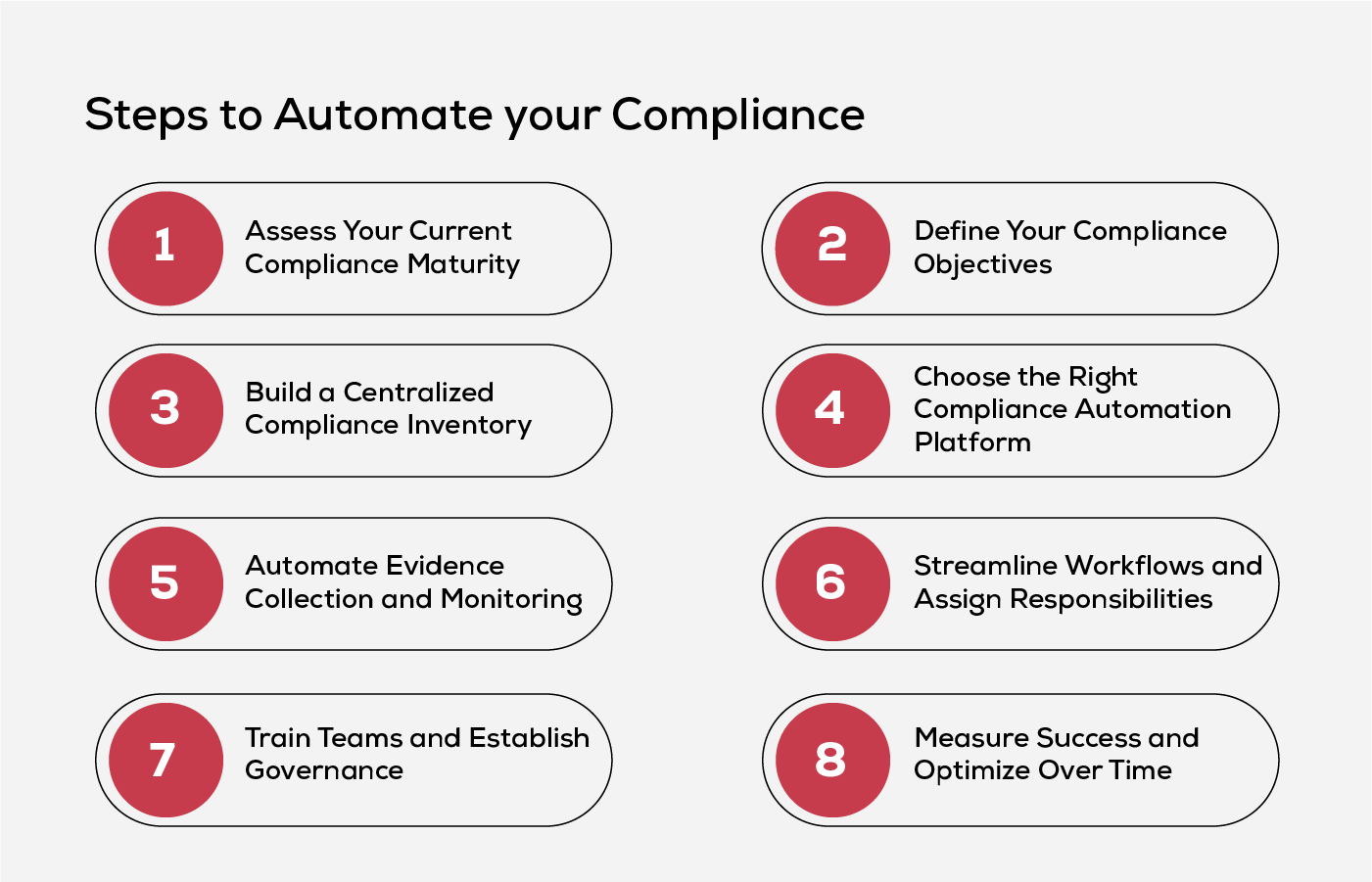
Step 1: Assess Your Current Compliance Maturity
Before introducing automation, it is essential to conduct a comprehensive review of how your organization currently handles compliance. By evaluating your current state, you can pinpoint specific gaps in documentation, identify unclear ownership, or uncover outdated processes that are currently draining your resources.
Step 2: Define Your Compliance Objectives
To implement a successful automated strategy, you must first identify the frameworks and regulations that are most critical to your business operations, whether that is SOC 2, ISO 27001, HIPAA, or GDPR. The tool you choose should simplify this strategic phase by supporting a wide array of major global frameworks. Establishing these clear objectives from the start acts as your roadmap, guiding everything from tool selection and evidence requirements to your final timelines for audit readiness and certification.
Step 3: Build a Centralized Compliance Inventory
Collect all policies, procedures, and evidence into a single organized repository. Scattered or incomplete documentation often slows down audit preparation and leads to repeated work. A centralized inventory becomes the single source of truth that automation tools rely on to manage controls and populate dashboards.
Step 4: Choose the Right Compliance Automation Platform
When selecting a compliance platform, your decision should hinge on four critical factors: deep integration with your current tech stack, coverage for all your required frameworks, an intuitive user experience for your team, and robust reporting for your stakeholders. The right system should align with your technical environment while supporting your long-term compliance roadmap.
Step 5: Automate Evidence Collection and Monitoring
To modernize your security posture, you must move beyond manual evidence gathering. By setting up automated data collection from your database, identity providers, HR systems and repositories, you eliminate the need for evidence hunting entirely. Most platforms support broad integrations that bring in user data, configurations, and control-related information, keeping records current and readily available when required.
Step 6: Streamline Workflows and Assign Responsibilities
To prevent compliance from becoming a series of missed deadlines, you must define clear ownership for every control, evidence item, and remediation task. Most platforms provide automated reminders and role-based dashboards, allowing you to assign responsibility, track progress, and maintain clear accountability across teams.
Step 7: Train Teams and Establish Governance
You must ensure that employees at every level understand their compliance responsibilities and how their actions align with defined policies. Establishing clear governance structures helps standardize how compliance is managed, reviewed, and enforced across the organization.
Step 8: Measure Success and Optimize Over Time
You should regularly evaluate how your compliance program is performing against defined objectives and control expectations. By analysing trends, outcomes, and control effectiveness, you can refine processes and adjust priorities where needed. This ongoing evaluation enables more informed decision-making and keeps your compliance program aligned with changing business and regulatory requirements.
Conclusion
Compliance automation is redefining how organizations approach governance in increasingly regulated and interconnected environments. As compliance becomes embedded within everyday operations, the focus shifts from isolated activities to a more coordinated and accountable framework.
For Banks and NBFCs, platforms like Inspirisys Komply360 illustrate how sector-specific requirements can be managed through integrated workflows and aligned processes.
Looking ahead, compliance automation will play a central role in enabling organizations to respond to regulatory shifts with greater confidence and consistency, while maintaining strong oversight across the business.
Frequently Asked Questions
1. What is compliance automation in simple terms?
Compliance automation is the use of technology to manage compliance activities such as evidence collection, control monitoring, policy tracking, and audit preparation.
2. Can one platform support multiple compliance frameworks?
Yes. Most modern compliance automation platforms are designed to support multiple frameworks such as SOC 2, ISO 27001, HIPAA, GDPR, and RBI regulations simultaneously. Controls and evidence can often be reused across frameworks, reducing duplication of work and improving consistency.
3. Is compliance automation scalable as organizations grow?
Yes. One of the biggest advantages of automation is scalability. As organizations expand across regions, teams, or regulatory frameworks, automated controls and workflows can be extended without proportional increases in manual effort or headcount.
4. Is compliance automation applicable across industries?
Yes. While often associated with IT and financial services, compliance automation is relevant across industries such as healthcare, manufacturing, retail, and telecom. It helps organizations manage regulatory requirements, standardize processes, and maintain accountability based on their specific compliance landscape.