
Quick Summary: Cloud security architecture is key to protecting sensitive data and cloud systems. By adopting proactive security practices, implementing strong access controls, and maintaining continuous monitoring, organizations can efficiently reduce risks. Compliance with regulations and regular assessments also contribute to firming up security and supporting smooth business operations.
To protect sensitive data and critical applications, an efficient Cloud Security Architecture is fundamental to securing cloud environments. As businesses increasingly adopt cloud platforms, the complexity of security management grows. It becomes crucial to design a well-defined architecture that not only secures data but also supports seamless operations. In this guide, we will explore the core principles, frameworks, and assessment methods that form the foundation of effective Cloud Security Architecture, demonstrating how it can proactively protect businesses from evolving cyber threats.
What is Cloud Security Architecture?
Cloud Security Architecture refers to a structured approach to securing cloud infrastructures through the implementation of security controls, practices, and solutions. It serves as a blueprint for protecting cloud-based resources from vulnerabilities, threats, and unauthorized access. By strategically deploying these security measures, organizations can protect their cloud assets.
The major components include Identity and Access Management (IAM), network security, data encryption, threat detection and prevention, as well as compliance with regulatory standards. This comprehensive framework ensures that cloud systems remain resilient, secure, and capable of addressing emerging cyber threats.
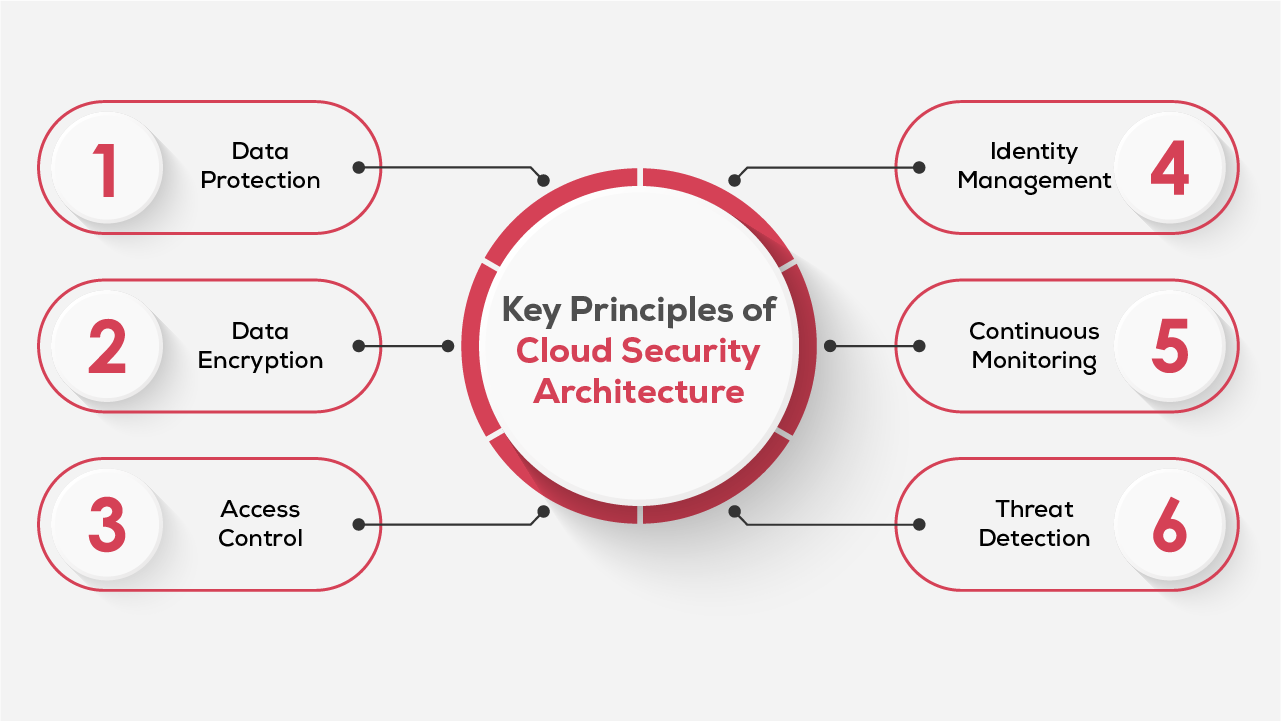
Key Principles of Cloud Security Architecture
When designing a cloud security architecture, it is vital to incorporate fundamental principles that ensure continuous monitoring and security. Below are the critical principles for building a secure cloud infrastructure:
Data Protection
Data protection forms the foundation of any cloud security strategy. Protecting sensitive information from unauthorized access is important for maintaining data confidentiality and integrity. This involves implementing measures such as secure storage, data masking and controlled access policies to protect data both in transit and at rest. Securing data helps prevent breaches and enables organisations to meet industry standards and regulations for privacy and security.
Data Encryption
Encryption is a key technique to secure data from unapproved access. Encrypting data both at rest (stored data) and in transit (data being transferred) guarantees that even if intercepted, the data remains unreadable without the decryption keys. Strong encryption algorithms are essential to maintain the privacy of data across the cloud environment. This is especially important for meeting compliance requirements such as GDPR, HIPAA, or PCI-DSS, which mandate strict encryption measures for protecting personal and financial data.
Access Control
Access control ensures that only authorized users can interact with specific data, applications, or services. This involves setting up rules for user authentication, defining roles, and enforcing strict permissions that prevent security breaches. By implementing fine-grained access control mechanisms, organizations can minimize the risk of insider threats or accidental exposure of sensitive resources.
Identity Management
Identity management systems (IAM) are vital for guaranteeing that only the right people have access to the right resources. IAM systems allow organizations to manage user identities, define roles, and assign permissions, restricting access to only what is necessary for users to carry out their job functions. This system also supports the concept of least privilege, reducing the risk of overexposure. Strong identity management practices are necessary for mitigating security risks related to user accounts and maintaining a secure cloud environment.
Continuous Monitoring
Cloud environments are dynamic and constantly evolving, which makes continuous monitoring indispensable to detect potential vulnerabilities or threats as soon as they arise. Continuous monitoring involves tracking all activities across the cloud infrastructure to detect suspicious behaviour, performance issues, or potential security breaches. By utilizing real-time monitoring tools, organizations can gain immediate insights into their systems' health and swiftly address any security concerns before they become acute.
Threat Detection
Effective threat detection is crucial to understanding the state of security in your cloud environment. Cloud security systems should be equipped with advanced threat detection tools that can identify unusual activities, such as data exfiltration or DDoS attacks. By implementing these systems, organizations can react promptly to mitigate threats and reduce the likelihood of damage. Proactive threat detection, coupled with incident response planning, helps organizations stay ahead of potential security risks.
The Role of Service Models in Shaping Cloud Security
Cloud service models like IaaS, PaaS, and SaaS serve as frameworks for delivering cloud-based solutions but each offers different levels of control over infrastructure, applications and data. These differences significantly impact an organization’s approach to security.
The Shared Responsibility Model
In the Shared Responsibility Model, the cloud provider is responsible for securing the underlying infrastructure, including the physical hardware, networking, and core cloud services. This includes the infrastructure layer, the hardware, and the network resources that make up the foundation of the cloud. On the other hand, the customer is responsible for securing everything above the infrastructure layer, such as the data, applications, and user access. This model ensures that both parties understand their roles in maintaining a secure cloud environment.
As the responsibility model varies across IaaS, PaaS and SaaS understanding these distinctions helps organizations develop appropriate security strategies based on the level of control they have in each model.
Security in IaaS
In the IaaS model, the customer has the most control over their cloud environment, meaning they are responsible for securing their virtual machines, operating systems and applications. The provider manages the physical infrastructure, but the customer handles most of the security configurations. Critical security measures for IaaS include data encryption, network segmentation, and Intrusion Detection Systems (IDS) to ensure that virtualized resources are protected.
Security in PaaS
For PaaS, the cloud provider manages the platform, including middleware and databases, while the customer is responsible for securing the applications and services they deploy on the platform. This includes securing code repositories, managing access controls, and implementing secure coding practices. The Shared Responsibility Model in PaaS emphasizes that the customer must focus on the application layer and ensure that development processes are secure by using practices like DevSecOps to address vulnerabilities early.
Security in SaaS
In the SaaS model, most of the security responsibilities lie with the cloud provider, as they manage the entire application. However, the customer is still responsible for user access control, ensuring strong identity management (e.g., multi-factor authentication) and secure data handling practices. The Shared Responsibility Model in SaaS ensures that while the provider takes care of much of the security, customers still play a crucial role in managing how users interact with the application.
By integrating the Shared Responsibility Model, organizations can better understand their specific security responsibilities in each cloud service model. As they shift from IaaS to PaaS to SaaS, they can tailor their security strategies, accordingly, ensuring both their cloud provider and they are aligned in keeping their cloud environments safe and secure.
Common Cloud Security Threats
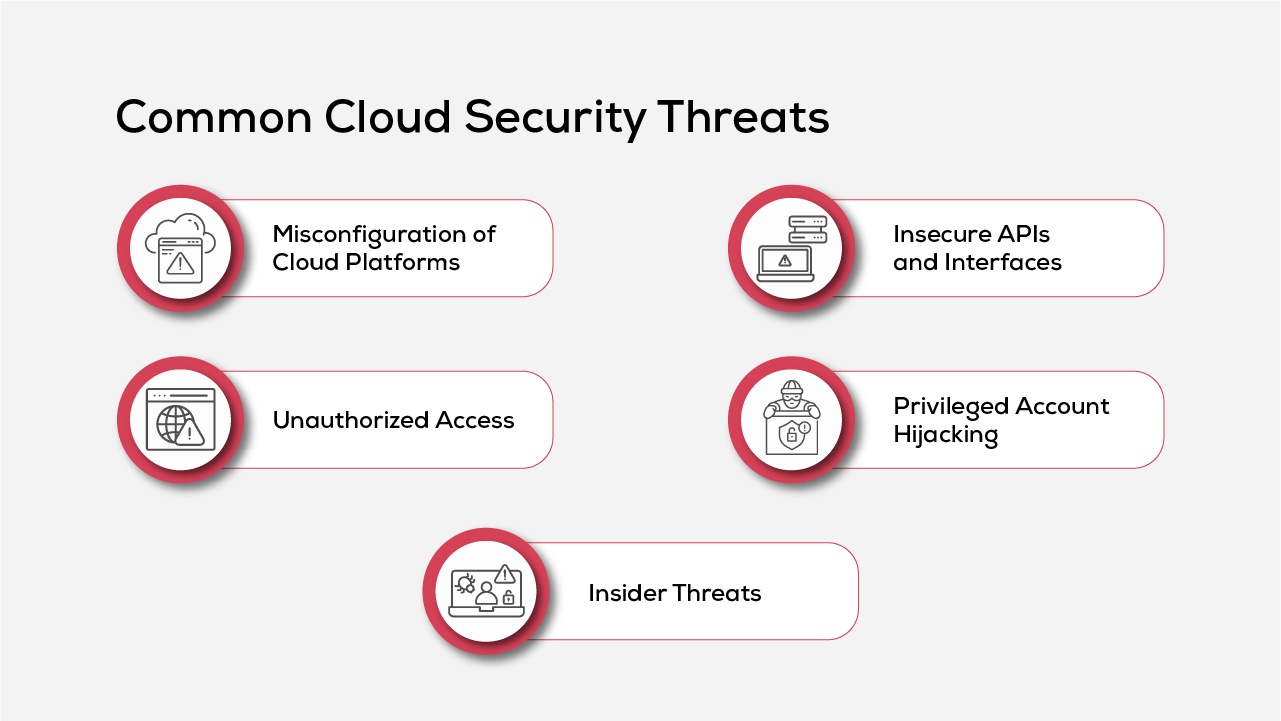
Cloud security threats are vulnerabilities and risks that can compromise the integrity, confidentiality, and availability of data and services within cloud settings. Understanding and addressing these threats is central to maintaining a secure infrastructure. A well-designed Cloud Security Architecture (CSA) helps protect against a wide range of potential risks. Below are some of the most significant cloud security threats:
1. Misconfiguration of Cloud Platforms
Misconfigurations in cloud platforms, such as storage or network systems, are one of the most common causes of security vulnerabilities. When cloud environs are improperly configured, it can lead to insecure communication channels, unintended exposure of sensitive data, and increased attack surfaces for cybercriminals. For example, using default authentication credentials, leaving ports open without restrictions, or granting overly permissive access rights can all open the door to attacks.
2. Unauthorized Access
Unauthorized access is a major cloud security threat, often leading to the theft or exposure of sensitive data. Attackers typically gain access through methods such as phishing attacks, credential theft, bypassing authentication mechanisms, or exploiting weak login practices. Once inside the cloud environment, these malicious actors can steal, alter, or delete data, causing significant damage.
3. Insecure APIs and Interfaces
APIs (Application Programming Interfaces) are necessary for interacting with cloud resources, allowing applications to provision, manage, and interact with cloud services. However, insecure APIs can create significant security risks, as they often serve as an entry point for cyberattacks. Attackers can exploit poorly secured APIs to gain unauthorized access to cloud resources, manipulate data, or cause disruptions.
4. Privileged Account Hijacking
Privileged accounts have elevated permissions and access to critical resources within cloud environments. If attackers manage to hijack these accounts, they can wreak havoc by accessing sensitive data, making illicit changes, or disabling security systems. Because of the high level of access these accounts provide, they are prime targets for cybercriminals.
5. Insider Threats
Insider threats are another serious concern in cloud environments. These threats come from individuals who have legitimate access to cloud resources, such as employees, contractors, or third-party vendors. Insider threats can be either intentional, such as malicious actions aimed at causing harm, or unintentional, resulting from human error or negligence. These are just a few of the most significant threats that can compromise cloud security. Understanding these risks and implementing appropriate safeguards such as encryption, access controls, continuous monitoring, and proper configuration management can significantly reduce the potential for security breaches and protect the integrity of your cloud infrastructure.
Best Practices for Cloud Security Architecture
Cloud security requires continuous vigilance, with regular assessments of cloud security architecture being key to protecting data, ensuring compliance, and staying ahead of evolving threats. Below are key best practices to effectively assess and strengthen your cloud security:
1. Map and Inventory Cloud Assets
Start by mapping all cloud assets virtual machines, containers, serverless functions, databases, and other resources. This inventory provides visibility into the attack surface, allowing for the identification of misconfigurations or vulnerabilities that could be exploited. Tools like Cloud Security Posture Management (CSPM) offer real-time monitoring and help uncover blind spots within the cloud infrastructure.
2. Ensure Compliance with Regulations
Adhere to industry standards such as GDPR, HIPAA, PCI-DSS, and the CSA STAR Program to protect sensitive data and avoid penalties. Regularly review security measures against these compliance frameworks to identify gaps and prompt remediation. Automated tools assist in maintaining compliance and addressing vulnerabilities quickly.
3. Conduct Penetration Testing and Simulations
Conduct penetration testing to simulate real-world attacks on the cloud environment, helping evaluate the security architecture's ability to withstand potential threats. These tests identify weaknesses in configurations, permissions, and workflows. Use the results to create a plan to address vulnerabilities before exploitation occurs.
4. Implement Automated Continuous Monitoring
Deploy automated monitoring tools like CSPM to continuously scan the cloud environment for misconfigurations and threats in real-time. These tools prioritize critical security issues, enabling a focus on the most pressing risks and reducing response times. Setting up automated monitoring guarantees consistent evaluation of the environment and prompt detection and resolution of threats.
5. Review Findings and Refine Security Policies
Conduct regular reviews of audit results, penetration test findings, and incident reports to identify patterns or recurring issues. Use this feedback to refine security policies, update configurations, and strengthen defences. Collaboration between teams like security, development, and operations facilitates the efficient implementation of changes and security measures.
6. Foster a Culture of Security Awareness
Promote a security-conscious culture within the organization through regular training on cloud security risks, data handling protocols, and best practices for preventing breaches. This helps minimize the risk of human error and fortifies the organization's overall security posture.
The Benefits of Cloud Security Architecture
Cloud Security Architecture offers significant benefits and lays the foundation for organizations to grow with confidence while safeguarding their assets.
- Secure Collaboration
Cloud Security Architecture facilitates safe collaboration by implementing secure access controls, encryption, and protected communication channels. These practices safeguard sensitive data, allowing teams to collaborate freely across different departments, locations, and external partners. - Supporting Innovation and Business Growth
By integrating strong security measures, cloud security architecture allows organizations to confidently adopt and implement emerging technologies like artificial intelligence, machine learning, and big data analytics. This enables businesses to expand their capabilities while keeping their systems secure. - Building Customer Trust and Loyalty
A solid architecture highlights an organization’s commitment to protecting customer data, strengthening relationships and establishing a reputation for dependability and security.
Cloud security architecture a pivotal role in driving modernization, securing partnerships, and building trust with customers for long-term success.
Conclusion
Mastering and maintaining a reliable Cloud Security Architecture allows organizations to move from a reactive stance to a proactive defence, actively safeguarding their environments rather than merely responding to incidents.
It can vary greatly depending on the type of services an organization uses, so it’s critical to recognize the time and expertise required to build a reliable security framework. By prioritizing security, investing in the right resources, and maintaining continuous vigilance, businesses can tackle the intricacies of cloud security effectively and with greater resilience.
Frequently Asked Questions
1. What is the role of on-premises infrastructure in cloud security?
On-premises infrastructure serves as the physical foundation for your IT system, including servers, storage, and networking equipment. Securing this layer involves physical security, data encryption, and network security measures like firewalls and intrusion detection systems to protect hardware and data.
2. How do identity and access management (IAM) solutions secure cloud resources?
IAM solutions secure cloud resources by managing user authentication, implementing multi-factor authentication, and using Role-Based Access Control (RBAC). They also provide continuous monitoring of user activities to ensure that only authorized users access cloud resources.
3. What are perimeter security controls, and why are they important?
Perimeter security controls, such as firewalls, IDS/IPS, and VPNs, act as the first line of defence, monitoring and filtering incoming and outgoing traffic. They help minimize the attack surface, control access to sensitive resources, and protect against external threats, including DDoS attacks.
4. How does security monitoring and logging contribute to cloud security?
Security monitoring and logging help track suspicious activity and maintain an audit trail of events within the cloud environment. By continuously monitoring cloud resources, organizations can detect potential threats early and respond quickly to mitigate risks.
5. Why is endpoint security essential for cloud security?
Endpoint security protects devices used by end-users, such as laptops, mobile devices, and IoT devices, from potential threats. It involves implementing antivirus software, Endpoint Detection and Response (EDR) tools to safeguard against unauthorized access and malware that could compromise cloud resources.