
Quick Summary: Compliance and Risk Management serve as the dual strategic pillars of modern business resilience. While Compliance ensures strict legal and ethical adherence to rules, Risk Management provides the necessary proactive strategy to mitigate all potential threats, from financial instability to reputational harm. Moving beyond simply minimizing losses, the commitment to it, increasingly enabled by AI and unified platforms like Komply360, transforms these functions into a source of sustainable competitive advantage and organizational trust in an era of continuous disruption.
Compliance and risk management are critical for organizations operating in today’s complex business environment. Regulatory requirements such as GDPR and CCPA impose strict compliance obligations, while cyber threats and supply chain disruptions increase operational risk. Together, these factors leave organizations with little tolerance for gaps in controls or delayed responses.
Compliance and risk management provide the structure needed to address these challenges. Compliance establishes the rules and standards organizations must follow, while risk management focuses on identifying and mitigating uncertainties that could impact business objectives. This guide outlines the frameworks and practices required to maintain regulatory alignment and build long-term resilience.
What is Compliance Management?
Compliance management is the process of ensuring that an organization follows applicable laws, regulations, industry standards, and internal policies. It enables businesses to operate within defined legal and regulatory boundaries by aligning day-to-day activities with external requirements such as data protection regulations, health and safety rules, anti-corruption laws, and internal governance policies.
This function is largely rule-driven and verification-focused. Compliance teams monitor regulatory changes, update policies, and check whether business processes align with established requirements. Adherence is typically demonstrated through documentation, audits, and reporting, often supported by compliance management tools that help maintain records and audit trails.
Compliance management concentrates on meeting defined obligations and demonstrating conformity. Its role is to ensure that once a requirement is established, the organization can consistently follow it and provide evidence of compliance when required.
How is Risk Management Different from Compliance Management?
Risk management and compliance management are closely related, but they serve different purposes within an organization. Understanding how they differ helps clarify how each contributes to business stability and decision-making.
Definition and Focus
While compliance management operates within clearly defined regulatory boundaries, risk management takes a broader view of uncertainty. Compliance is concerned with meeting established legal and policy requirements, whereas risk management focuses on identifying and addressing potential threats that could impact business objectives, even when no specific regulation applies.
Purpose and Scope
The primary purpose of compliance management is to prevent regulatory breaches, penalties, and reputational harm arising from non-compliance. Its scope is limited to obligations the organization is required to follow.
Risk management aims to reduce the impact of uncertainties on the organization as a whole. Its scope includes both known and emerging risks, even when no specific regulation applies, such as market volatility or technological change.
Approach and Emphasis
Compliance management is implemented through defined policies, controls, audits, and documentation. The emphasis is on demonstrating adherence to established requirements and maintaining verifiable records.
Risk management relies on structured processes and frameworks to evaluate risk exposure and guide mitigation efforts. The emphasis is on analysis, prioritization, and informed decision-making rather than strict rule enforcement.
Cultural Impact and Outcomes
Compliance management promotes awareness of acceptable conduct and accountability, helping organizations maintain regulatory alignment and ethical standards.
Risk management supports proactive planning and resilience by encouraging organizations to anticipate challenges, limit potential losses, and respond effectively to change.
Role of Compliance and Risk Management in Business
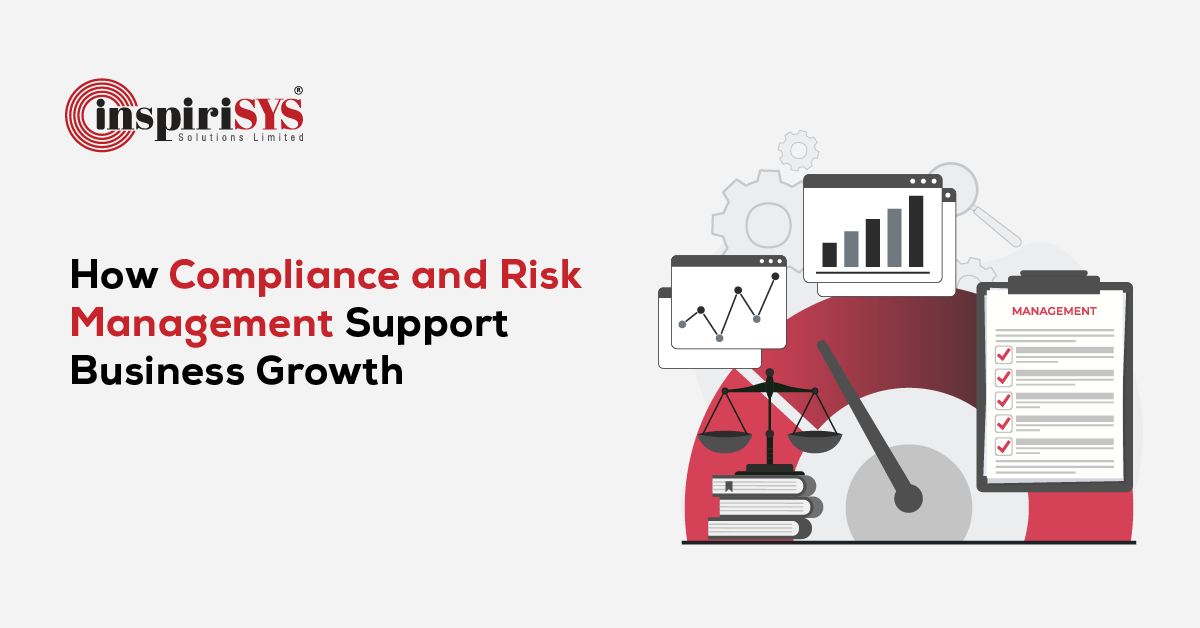
Compliance and risk management serve as complementary pillars of corporate stability. Together, they help protect an organization’s reputation and financial health by fulfilling the following critical roles.

Ensuring Adherence to Mandates
Compliance management provides the operational structure that allows organizations to consistently meet regulatory and internal obligations. By embedding controls, monitoring mechanisms, and reporting processes into day-to-day operations, it reduces the likelihood of violations and helps organizations respond effectively to regulatory scrutiny.
Protecting Organizational Reputation
Strong compliance practices reinforce ethical conduct, while risk management broadens protection by addressing non-regulatory exposures that may affect brand perception. Together, they help organizations maintain credibility with customers, partners, and regulators.
Safeguarding Against Broad Business Threats
Risk management strengthens business continuity by identifying and addressing operational, financial, strategic, and cyber risks that could disrupt objectives. This broader perspective helps organizations remain resilient in the face of uncertainty.
Creating Structured Frameworks for Stability
Compliance and risk management introduce structure through well-defined frameworks and repeatable processes. Regulatory standards guide compliance activities, while enterprise risk frameworks support consistent assessment and mitigation, enabling stable and predictable operations over time.
Enhancing Operational Efficiency
When aligned effectively, compliance and risk management streamline governance activities across the organization. Automation and shared workflows reduce manual effort, improve coordination between teams, and support more informed decision-making.
Types of Business Challenges
The four basic types of business risks that enterprises commonly face are Strategic, Operational, Financial, and Compliance risks. These categories help organizations create a comprehensive Enterprise Risk Management (ERM) plan.
Strategic Risk
Strategic risk relates to decisions and choices that affect an organization’s long-term direction and competitiveness. It includes risks arising from ineffective strategies, poor market positioning, or failure to adapt to industry or technology changes.
Examples include failing to innovate and losing market share to competitors, expanding into a new market without sufficient research, or being unable to respond to significant shifts in consumer behavior or technological advancements.
Operational Risk
Operational risk refers to losses arising from breakdowns in internal processes, people, systems, or from external events that disrupt routine business operations. Unlike strategic risks, these are often related to execution.
Common examples include human errors leading to service failures, equipment malfunctions causing production delays, internal process inefficiencies, or external factors like a natural disaster interrupting supply chain operations.
Financial Risk
Financial risk affects an organization’s assets, revenue, and overall financial stability. Market volatility, credit exposure, and liquidity constraints directly influence cash flow and fiscal performance.
Key forms of financial risk include credit risk (the chance a customer or partner will default on a debt), liquidity risk (the inability to meet short-term financial obligations), and market risk (losses from fluctuations in currency exchange rates or interest rates).
Compliance Risk
Compliance risk relates to gaps in meeting internal policies, industry standards, or external legal and regulatory requirements. Such gaps can result in penalties, legal action, and damage to organizational credibility.
Notable examples include non-compliance with data protection laws (like GDPR), labour laws, environmental regulations, or financial reporting standards.
Best Practices for Compliance and Risk Management
Effective compliance risk management requires more than meeting regulatory requirements. These best practices outline practical steps organizations can take to strengthen oversight and reduce exposure.
- Establish Clear Ownership and Accountability
Define clear responsibility for monitoring and managing compliance risks across the organization. Assign ownership at the process or risk level so expectations are clear, actions are coordinated, and gaps in oversight are avoided.
- Strengthen Leadership Involvement and Oversight
Active involvement from senior management reinforces the importance of compliance across the organization. Leadership oversight helps align compliance objectives with business priorities, ensures timely issue resolution, and supports continuous improvement.
- Apply Recognized Compliance Frameworks
Adopt established frameworks such as ISO 27001 or SOC 2 to structure compliance efforts and maintain consistency. These frameworks provide clear guidance for protecting data integrity, meeting regulatory expectations, and demonstrating compliance maturity to external stakeholders.
- Maintain Ongoing Employee Awareness and Training
Regular training ensures employees remain informed about regulatory requirements, policy updates, and their individual responsibilities. Continuous awareness programs help embed compliance into daily operations and reduce the likelihood of unintentional violations.
- Use Technology to Support Compliance Activities
Leverage appropriate tools to streamline compliance monitoring, documentation, and reporting. Automation improves visibility into compliance risks, supports timely response, and reduces manual effort associated with audits and regulatory reviews.
What Lies Ahead for Compliance and Risk Management?
Compliance and risk management will increasingly operate in environments defined by rapid change, tighter regulatory scrutiny, and greater interconnectedness across business ecosystems. As organizations face faster risk cycles and shorter response windows, these areas will need to support quicker assessment and action rather than periodic review.
Technology adoption will accelerate this shift. Greater use of automation, advanced analytics, and AI-supported tools will enable continuous monitoring and earlier identification of compliance gaps and emerging risks. While decision authority will remain with human teams, reliance on data-driven insights will increase to manage scale and complexity.
Risk approaches will also continue to move beyond prevention alone. Future practices will place stronger emphasis on detection, response, and recovery, supported by broader use of risk transfer and stronger management of third-party and reputation risks. This direction reflects the reality that organizations must operate effectively amid uncertainty, not just attempt to avoid it.
Conclusion
Managing compliance and risk effectively is ultimately about enabling consistency and clarity in how an organization operates. As regulatory obligations expand and business environments become more interconnected, success depends on structured processes that support accountability, visibility, and timely action across the enterprise.
Solutions like Komply360 support this approach for banks and financial institutions by leveraging AI to decode complex regulations, automatically assign obligations, and provide unified, real-time dashboards across regulatory bodies and branches. Beyond risk avoidance, effective compliance and risk management strengthen corporate reputation, support financial stability, and create guardrails that help businesses move forward with greater confidence toward their strategic goals.
Frequently Asked Questions
1. What is the fundamental difference between Compliance vs. Risk Management in a modern enterprise?
While often grouped together, these two functions have distinct mandates: one is focused on strict adherence to rules and laws, and the other is centred on proactive threat mitigation across the entire business landscape.
2. Why is third-party risk management important for compliance?
Third-party risk management is critical because vendors, partners, and service providers can introduce compliance and operational risks. Organizations remain accountable for regulatory breaches even when activities are outsourced, making oversight of third parties essential.
3. What are the primary consequences of a major compliance failure in today's market?
The fallout from a compliance failure extends far beyond just fines. In a hyper-connected world, the damage is amplified, directly impacting financial stability, market access, and long-term reputation.
4. How does compliance contribute to business continuity?
Effective compliance supports business continuity by reducing the likelihood of regulatory disruptions, enforcement actions, and operational shutdowns. It also helps organizations respond more predictably during crises.
5. What problems does Komply360 help solve?
Komply360 helps address challenges such as manual compliance tracking, fragmented reporting, delayed regulatory updates, and limited visibility across branches or departments.