
Organisations are investing heavily in cybersecurity technologies, yet many still struggle to determine how prepared they are to withstand and respond to security incidents. The financial consequences of security incidents underline the importance of this concern. According to IBM’s 2026 Cost of a Data Breach Report, the global average cost of a data breach reached a record USD 4.99 million, marking a 12% increase from the previous year.
While security tools provide visibility into threats and generate valuable data, these insights alone do not establish how well an organisation can prevent attacks, respond to incidents or recover from disruptions. Assessing security effectiveness requires a broader view of the organisation's overall readiness.
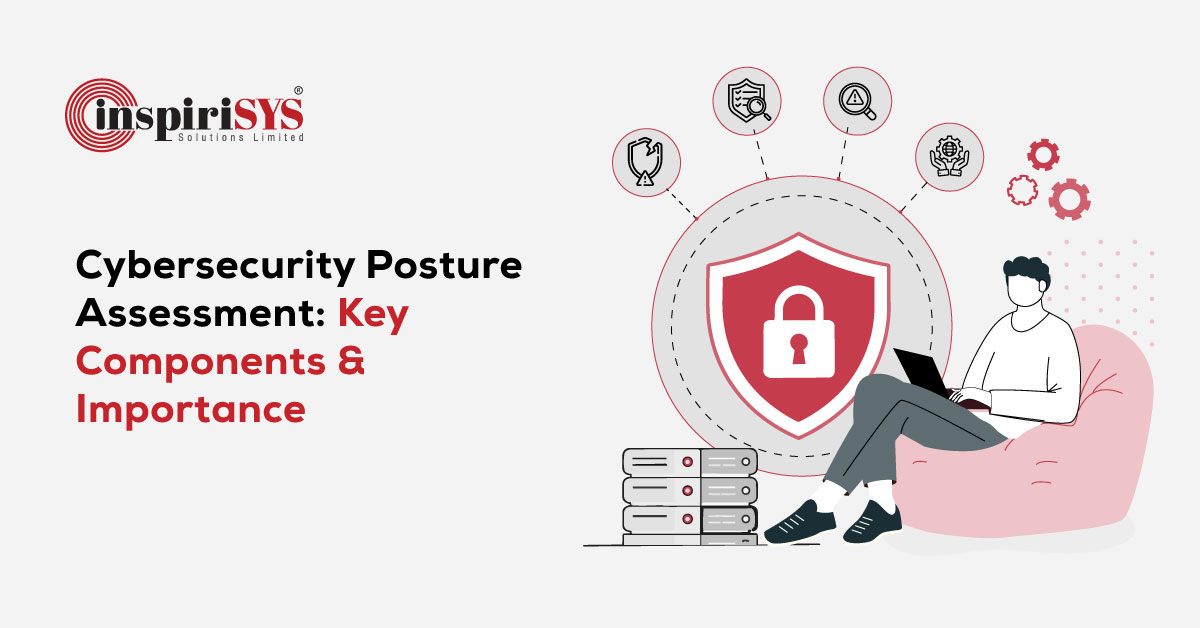
This is where cybersecurity posture becomes an important indicator, providing a high-level view of an organisation's security robustness and helping leaders make informed decisions about risk and resilience.
What Does Security Posture Reflect
Security posture reflects how well an organisation's security controls operate as a system. It is shaped by the configuration of security technologies, enforcement of access policies, execution of governance processes and consistency of security practices across the environment. Weaknesses in any of these areas directly influence the organisation's overall security condition.
Simply deploying firewalls, antivirus software and other security solutions does not guarantee adequate protection. A strong security posture also requires clear visibility into the organisation's entire IT environment. This includes knowing which assets are connected to the network, how cloud resources are configured and which identities have access to critical systems and data. Unknown assets, unmanaged cloud configurations, forgotten accounts and shadow IT can introduce risks that are difficult to detect without continuous oversight.
Difference between Cybersecurity Compliance and Posture Assessment
Regulatory compliance and cybersecurity posture assessment serve different but complementary purposes. Compliance confirms that required controls, policies and processes are in place to meet regulatory or industry obligations. A cybersecurity posture assessment, however, is determined by how those controls perform in day-to-day operations and under real-world attack scenarios.
This distinction is important because compliance assessments typically measure alignment against predefined requirements at a specific point in time. They do not evaluate whether controls are consistently enforced, properly configured or effective against emerging threats. As a result, an organisation may successfully meet compliance requirements while still carrying security weaknesses that affect its ability to prevent, detect or contain cyber incidents.
Key Components of a Cybersecurity Posture Assessment
A cybersecurity posture assessment covers several critical areas of an organisation's IT environment, from asset management and access controls to data protection and threat detection. Each component provides insight into a different aspect of security.
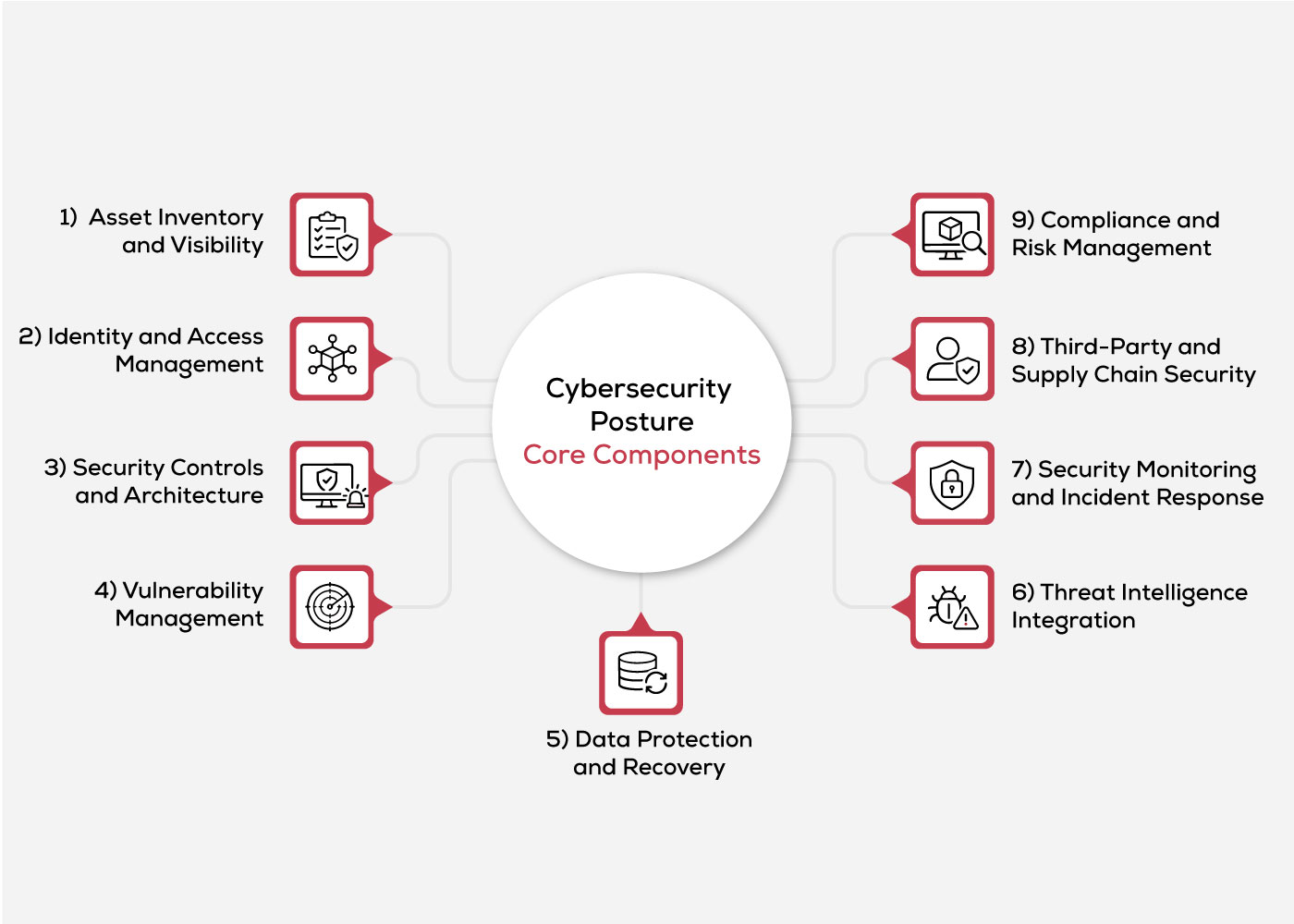
Asset Inventory and Visibility
Asset inventory covers hardware, software, cloud resources, applications and connected devices across the organisation's IT environment. It includes identifying unmanaged assets and shadow IT, along with classifying systems and data based on their business criticality and sensitivity. This establishes visibility into the organisation's attack surface.
Identity and Access Management
Identity and access management focuses on how users are authenticated and granted permissions across the IT environment. This includes privileged accounts, role-based access controls, segregation of duties and multi-factor authentication. User provisioning and deprovisioning practices are also assessed to identify excessive or outdated access permissions.
Security Controls and Architecture
This component covers the configuration and effectiveness of security controls across networks, endpoints and applications. Key areas include network segmentation, security boundaries and configuration management. These provide insight into misconfigurations and weaknesses that could expose critical systems to unauthorised access or common attack paths.
Vulnerability Management
Vulnerability management focuses on identifying and evaluating known weaknesses across operating systems, applications and network devices. It also considers patch management practices and the severity, exploitability and potential business impact of identified vulnerabilities to establish remediation priorities.
Data Protection and Recovery
This component examines how sensitive and business-critical information is classified, stored and protected. It includes encryption for data at rest and in transit, access restrictions and data loss prevention controls. Backup and recovery arrangements are also evaluated to determine the organisation's ability to restore critical information following compromise or disruption.
Threat Intelligence Integration
Threat intelligence integration examines how information about emerging threats, attack techniques and indicators of compromise informs security decisions. It considers how relevant threat intelligence is used to identify potential exposures and adapt defensive measures to the evolving threat landscape.
Security Monitoring and Incident Response
This component covers security event logging, monitoring and threat detection across the IT environment. It also includes incident response procedures, escalation workflows and recovery arrangements to assess how effectively security incidents can be detected, contained and resolved.
Third-Party and Supply Chain Security
Third-party and supply chain security focuses on risks associated with vendors, partners and service providers that access organisational systems or data. Key considerations include supplier security controls, third-party access permissions and contractual security requirements, as well as vulnerabilities introduced through external dependencies.
Compliance and Risk Management
This component covers adherence to applicable regulatory requirements, industry standards and internal security policies. It also examines how security risks are identified, documented and prioritised, along with the processes used to track corrective actions and address identified weaknesses.
Remediation Based on Assessment Outcomes
A cybersecurity posture assessment delivers value when its findings lead to corrective action. Security teams must first prioritise identified weaknesses based on their severity, likelihood of exploitation and potential business impact. This helps direct attention and resources towards critical vulnerabilities and exposures that pose the greatest risk to the organisation.
Once priorities are established, teams can define corrective actions, assign responsibilities and set completion timelines. These actions may include applying security patches, correcting system misconfigurations, restricting excessive access permissions and strengthening existing security controls. Vulnerability scanning can further help identify known weaknesses and determine which systems require attention.
Following implementation, teams must verify whether the corrective measures have addressed the identified issues. This involves reassessing affected systems, testing security controls and tracking unresolved vulnerabilities. Periodic reviews also help identify recurring weaknesses and guide further improvements to the organisation's security posture.
Build a Stronger Cybersecurity Posture with Inspirisys
Every security weakness carries a potential business cost. As organisations expand their digital infrastructure and rely on interconnected systems, the consequences of overlooked vulnerabilities can extend to critical operations, sensitive information and customer confidence. Understanding the effectiveness of existing security measures is essential to making sound security decisions and avoiding preventable exposure.
Inspirisys brings expertise in Enterprise Security Services to help organisations address their cybersecurity requirements and strengthen their security foundations. Connect with us to take a more informed approach to cybersecurity and prepare your organisation for evolving threats.
Frequently Asked Questions
1. Who should conduct a cybersecurity posture assessment?
Cybersecurity posture assessments can be conducted by an organisation's internal IT and security teams or by external specialists. Independent cybersecurity assessors or Managed Security Services Providers (MSSPs) can provide an objective evaluation of existing security controls, identify overlooked vulnerabilities and recommend improvements based on the organisation's security requirements.
2. What is the difference between a cybersecurity posture assessment and a vulnerability assessment?
A vulnerability assessment focuses on identifying technical weaknesses in specific systems, software, or networks. A cybersecurity posture assessment takes a broader view by examining governance, access controls, monitoring capabilities, data protection practices and third-party risks in addition to technical vulnerabilities.
3. What are the common challenges organizations face when assessing their security posture?
Organizations often struggle with incomplete asset inventories, limited visibility across hybrid environments, inconsistent security processes and unmanaged third-party risks. These challenges can make it difficult to build an accurate picture of overall security performance.
4. How can organizations measure improvements in their cybersecurity posture over time?
Organizations can track metrics such as critical vulnerability remediation rates, privileged access reviews, security incident trends, control coverage and compliance with internal security policies. Comparing assessment results over time helps demonstrate progress and highlight areas that require additional attention.