
How confident are you that every regulatory requirement applicable to your bank is reflected in the right policy, control and process?
For banking leaders, answering that question is becoming harder as compliance responsibilities span multiple areas, teams and systems. A requirement may be documented, a control may be in place, and yet a gap can still exist between what is expected and what is actually happening.
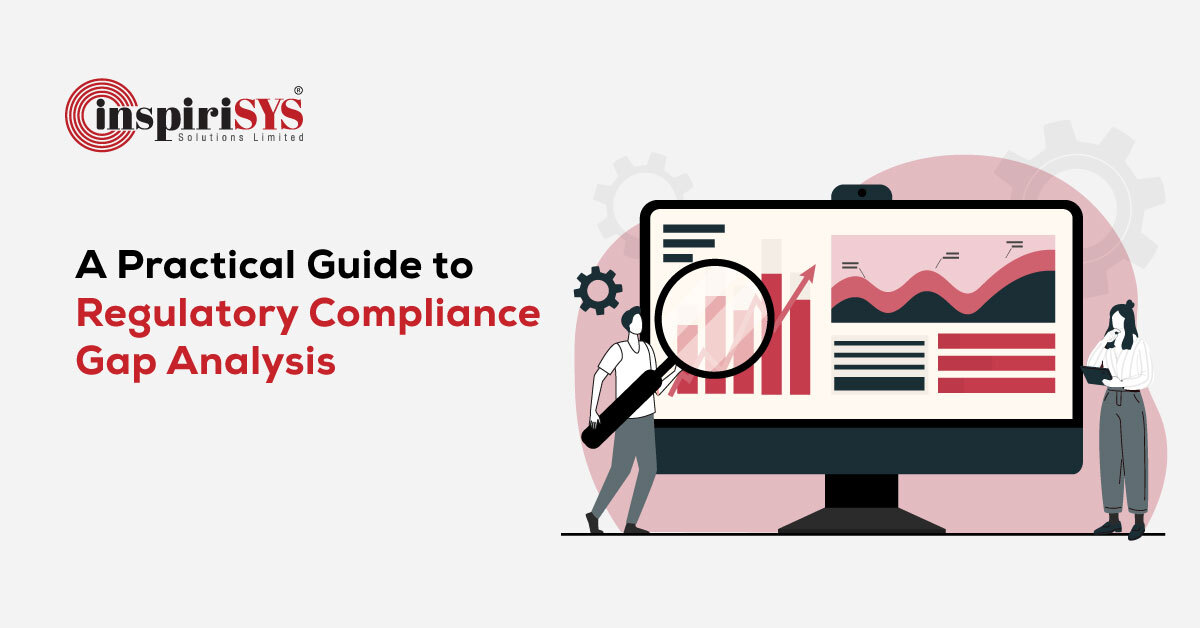
This is where regulatory compliance gap analysis can provide clarity. It gives leaders a structured way to see where the organisation stands against its obligations, identify areas that need attention and take necessary action.
This article explores how the process works, the key areas financial institutions should evaluate and the role technology plays in strengthening compliance management.
What Compliance Gap Analysis Means for Business Leaders
A regulatory compliance gap analysis gives banking leaders a clear picture of the organisation’s current compliance posture against the expectations set by applicable regulations. It helps answer a practical question about whether existing policies, processes and controls adequately address regulatory requirements.
The assessment starts by looking at the compliance essentials that apply to the organisation and identifying where its current state meets, falls short of or differs from those expectations. It covers policies, processes, compliance controls, technology, people and evidence, providing a view of how compliance is supported across the organisation and demonstrated in practice.
A gap analysis also serves a different purpose from a compliance audit. While an audit typically evaluates whether established controls and requirements are being followed and provides assurance based on defined audit objectives, a gap analysis focuses on where the organisation falls short of the expected regulatory state. It is therefore useful when a bank needs to understand what needs to be strengthened before it becomes an audit or regulatory concern.
For leaders, the value is in turning this assessment into a prioritised view of what needs attention. It can highlight compliance deficiencies across critical areas, distinguish higher-impact gaps from lower-priority ones and provide a basis for deciding where remediation efforts and resources should be focused.
Understanding the Scope of Regulatory Compliance
For banks and financial institutions, regulatory compliance extends well beyond policy reviews. Alongside RBI requirements, institutions must address obligations related to KYC/AML, cybersecurity, data protection, payments, outsourcing, regulatory reporting and operational resilience. Effective compliance requires understanding which regulations apply and ensuring they are embedded across business processes, technology systems, controls and governance practices.
The following areas are particularly important when assessing regulatory compliance gaps.
Cybersecurity and Information Security
Banking cybersecurity compliance focuses on safeguarding financial systems, customer information and business-critical technology assets against evolving cyber risks. It spans access controls, threat monitoring, vulnerability management, incident response and security testing. RBI's supervisory reviews increasingly examine how institutions manage cyber risks and monitor security incidents.
Data Protection and Privacy
Data privacy compliance India is an important part of financial institution compliance because banks handle significant volumes of customer and financial information. The Digital Personal Data Protection Rules, were notified in November 2025, adding implementation requirements under India's data protection framework.
The assessment therefore needs to consider how personal data is collected, accessed, processed, protected, retained and deleted, along with the governance and controls supporting these activities.
KYC and AML
KYC and AML requirements sit at the centre of banking compliance, covering customer due diligence, risk classification, sanctions screening, transaction monitoring and suspicious activity reporting. Recent RBI updates have also strengthened expectations around KYC updation and the monitoring of low-risk customers.
A gap assessment in this area would therefore examine whether customer identification, monitoring, screening, reporting and investigation processes adequately address applicable requirements.
IT Governance and Third-Party Risk
Technology dependencies and outsourcing create additional regulatory obligations for financial institutions. RBI's regulatory framework places responsibility on regulated entities to manage risks arising from outsourced activities and maintain appropriate oversight of service providers.
The assessment should therefore consider vendor due diligence, contractual responsibilities, data handling, access controls, third-party monitoring and the management of risks arising from fintech partners, cloud providers and other service providers.
Regulatory Reporting and Governance
Regulatory compliance also depends on whether financial institutions can accurately demonstrate how they meet their obligations. This includes maintaining appropriate records, audit trails, regulatory filings, compliance status information and evidence for regulatory reviews.The assessment should also consider how regulatory changes are identified, assessed for impact, assigned for implementation and reported to senior management or the Board.
How to Conduct a Regulatory Compliance Gap Analysis in Banks
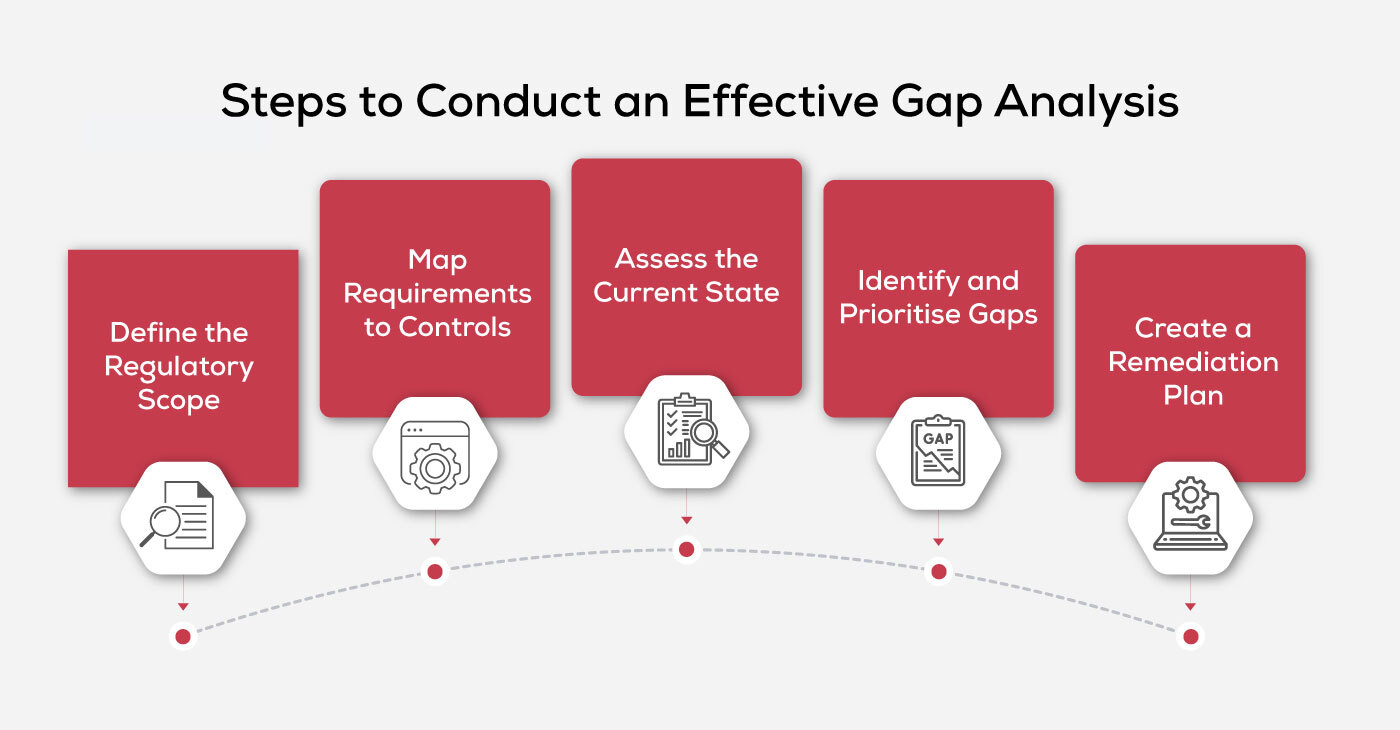
An effective compliance gap analysis is a structured exercise that helps banks determine which compliance requirements apply, evaluate whether existing controls meet those obligations, identify deficiencies and plan corrective action. When followed consistently, the process strengthens banking regulatory compliance, improves audit readiness and supports informed compliance management.
Define the Regulatory Scope
The first step is determining which regulatory requirements apply to the institution. A focused scope ensures the assessment reflects the bank's actual risk and operating environment rather than treating every regulation as equally relevant.
This scope should be defined by factors such as the institution's business model, products and services, customer base, data handled, technology landscape, geographic presence, and reliance on third-party providers. Together, these elements determine the regulatory obligations that must be addressed across areas such as RBI compliance, cybersecurity, data protection, outsourcing and operational resilience.
Map Requirements to Controls
Once the regulatory scope is defined, each requirement should be translated into a measurable compliance control. Rather than treating regulations as standalone documents, banks should establish a clear relationship between the requirement, the control that addresses it, the business owner responsible for maintaining it and the evidence needed to demonstrate compliance.This mapping creates accountability and gives leadership visibility into how regulatory obligations are operationalised across the organisation.
Assess the Current State
The next step is to evaluate whether each control is functioning as intended. This assessment should go beyond documentation and determine whether controls are consistently embedded in day-to-day operations.
For every control, banks should assess whether it is documented, implemented, consistently followed and effective. Supporting evidence includes system logs, approval records, audit trails, monitoring reports, policy acknowledgements or regulatory documentation, depending on the control being evaluated. The objective is to establish the institution's actual compliance posture rather than its intended one.
Identify and Prioritise Gaps
Once the current state is assessed, the organisation can identify areas where controls do not fully satisfy applicable compliance requirements. Not every gap carries the same level of regulatory risk, so prioritisation becomes critical for effective compliance management.
Not all compliance gaps carry the same level of risk. Banks should evaluate gaps against their potential regulatory, financial, operational, cybersecurity and customer impact, as well as the importance of the affected assets and processes. This enables leadership to direct resources toward the most critical issues first.
Create a Remediation Plan
The final step is to convert assessment findings into a structured compliance remediation plan. Every identified gap should have a clearly assigned owner, defined corrective actions, realistic implementation timelines and measurable closure criteria.
Progress should be tracked through ongoing compliance monitoring and periodic reviews to ensure corrective actions are completed and remain effective over time. This not only strengthens financial services compliance but also improves the organisation's readiness for future regulatory reviews and compliance audits.
What Banks Gain from a Regulatory Compliance Gap Analysis?
For banking leaders, a regulatory compliance gap analysis can provide more than a view of compliance status. It can help the organisation make better decisions, reduce exposure and strengthen the way compliance supports business operations.
Reduced Regulatory Risk and Liability
A clearer view of compliance gaps can help banks address potential areas of regulatory exposure and reduce the likelihood of penalties, fines and other liabilities.
Improved Operational Efficiency
Clearer compliance processes and defined requirements can help reduce duplication, streamline activities and improve how teams manage compliance-related work.
Greater Customer Trust and Public Confidence
Consistent adherence to regulatory expectations demonstrates a commitment to responsible and secure banking practices, helping strengthen customer confidence and the institution's reputation.
Greater Business Resilience
A stronger compliance foundation can help financial institutions respond more effectively to regulatory requirements and maintain continuity when business or technology disruptions occur.
How Technology Can Strengthen Regulatory Compliance Gap Analysis
A regulatory compliance gap analysis can generate significant volumes of requirements, assessments, evidence and remediation actions. Managing these activities manually often limits visibility and makes it harder to track progress consistently. Technology helps centralise compliance efforts, providing a clearer view of obligations, findings and remediation status while reducing administrative overhead.
Automation
Automation can reduce the manual work involved in tracking regulatory requirements, mapping them to controls, collecting evidence and following up on remediation activities. This allows compliance teams to spend more time evaluating compliance issues and less time managing information across disconnected processes.
AI-Powered Compliance Analysis
AI can support compliance teams by analysing regulatory requirements and large volumes of compliance information to identify potential gaps or areas that may require attention. For banking leaders, this can provide an additional layer of analysis when reviewing complex compliance environments.
Data Analytics
Compliance data can provide useful insights when brought together and analysed systematically. Data analytics can help identify recurring gaps, risk patterns and areas requiring greater management attention, giving leaders a more informed view of the institution's compliance posture.
Bringing Compliance Management Together
For banks and NBFCs, having regulatory requirements, controls, assessments, evidence and remediation activities connected in one place can make compliance easier to manage and track. Komply360 brings these elements together to help organisations establish a structured compliance process, improve visibility into their compliance posture and manage regulatory obligations more consistently.
Conclusion
Regulatory compliance gap analysis gives leadership a way to test whether regulatory obligations are translating into sound practices across the institution. Its importance lies not in producing another compliance report, but in revealing where assumptions about compliance may differ from what is in place.
As India continues to strengthen its regulatory framework and supervisory expectations, a disciplined approach to compliance can help institutions make better-informed decisions about risk, investment and operational priorities. Over time, this can support stronger business continuity, stakeholder confidence and sustainable growth, while giving leadership a more reliable foundation for navigating regulatory obligations.
Frequently Asked Questions
1. How do you prioritize gaps identified in a compliance gap analysis?
Organizations should prioritize gaps based on how serious they are, the potential impact on business operations, the risk of regulatory penalties and how quickly they need to be addressed. This helps leaders focus on the most critical gaps first and plan corrective actions accordingly.
2. What is the difference between a Compliance Gap Analysis and a Risk Assessment?
Compliance gap analysis evaluates an organization's policies, processes and controls against specific regulatory or framework requirements to identify areas of non-compliance. Risk assessment evaluates potential threats and vulnerabilities based on their likelihood and business impact. While gap analysis answers whether an organization meets compliance requirements, risk assessment determines what could go wrong and how severely it could affect the business.
3. How often should a compliance gap analysis be conducted?
A compliance gap analysis should be conducted periodically, particularly before regulatory audits, when new regulations are introduced, or when significant changes occur in business operations, technology or internal processes. Regular, risk-based assessments help organizations identify emerging gaps, prepare for audits and maintain continuous compliance.
4. How can organizations simplify regulatory compliance management?
Regulatory compliance management can become complex as organizations deal with multiple regulations, changing requirements and compliance responsibilities across teams. A platform like Komply360 helps streamline compliance through regulatory intelligence, automated task allocation, centralized compliance tracking and real-time monitoring, giving organizations better visibility and control over their compliance activities.