
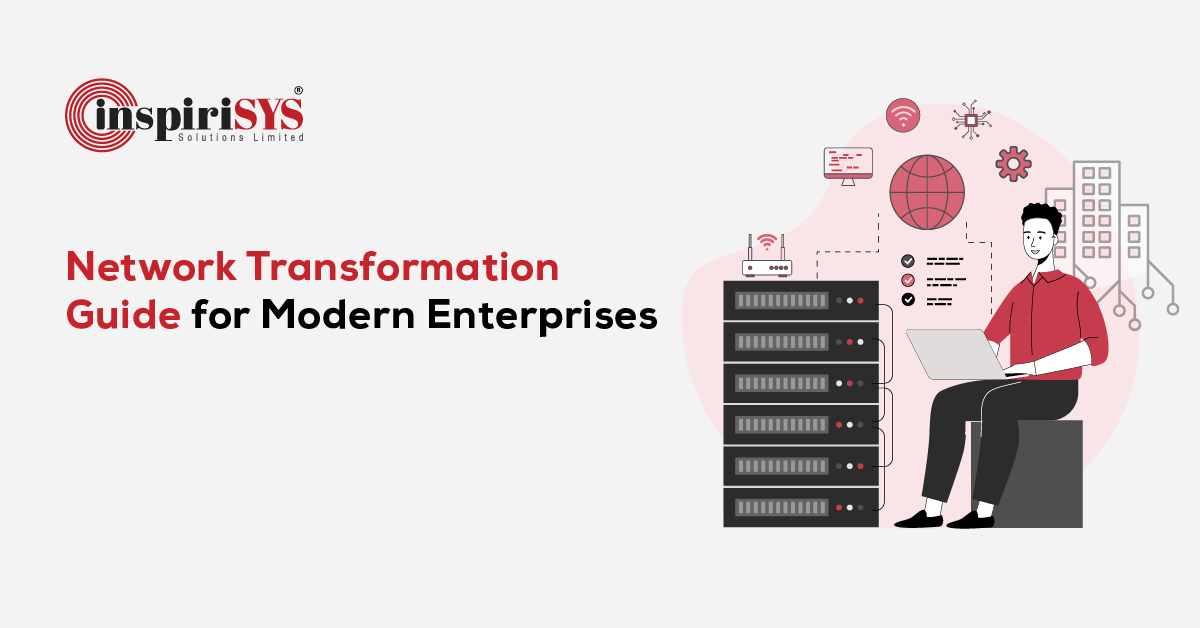
Network transformation has become a strategic imperative for organizations seeking to build agile, and high-performing digital enterprises. As businesses embrace cloud platforms, hybrid work, AI-driven applications, and distributed IT environments, traditional network architectures can no longer keep pace with evolving operational and business demands.
Rather than simply upgrading hardware, network transformation involves rethinking how networks are designed, managed, secured, and optimized to support scalability, resilience, and innovation. It enables IT leaders to create intelligent, software-driven networks that deliver consistent performance while adapting to changing business needs.
This blog explores every aspect you need to know about network transformation.
What is Network Transformation
Network transformation is the strategic modernization of an organization's network infrastructure to create an intelligent, software-defined foundation that supports today's digital operations. It moves beyond maintaining traditional, hardware-centric networks by integrating automation, centralized control, and programmable technologies that simplify network administration and improve operational visibility.
Instead of treating the network as a static IT asset, network transformation makes it a dynamic platform that can efficiently support changing business applications, users, devices, and workloads while enabling consistent connectivity across diverse environments.
Why Network Transformation Matters Today
The way organizations operate has changed dramatically and networks must now support far more complex environments than before. With applications spread across data centers, cloud platforms and edge locations, businesses need connectivity that can link everything together without delays or disruptions.
Another key factor is the growing volume of data. Applications these days generate and process massive amounts of information in real time, putting pressure on networks to deliver consistent speed and reliability. Without transformation, systems struggle to keep pace, leading to operational inefficiencies and increased exposure to security threats.
There is also a growing need to strengthen cybersecurity while improving network visibility, security, and control. This has made advanced monitoring tools and network performance management essential for maintaining smooth operations.

Key Enablers of Network Transformation
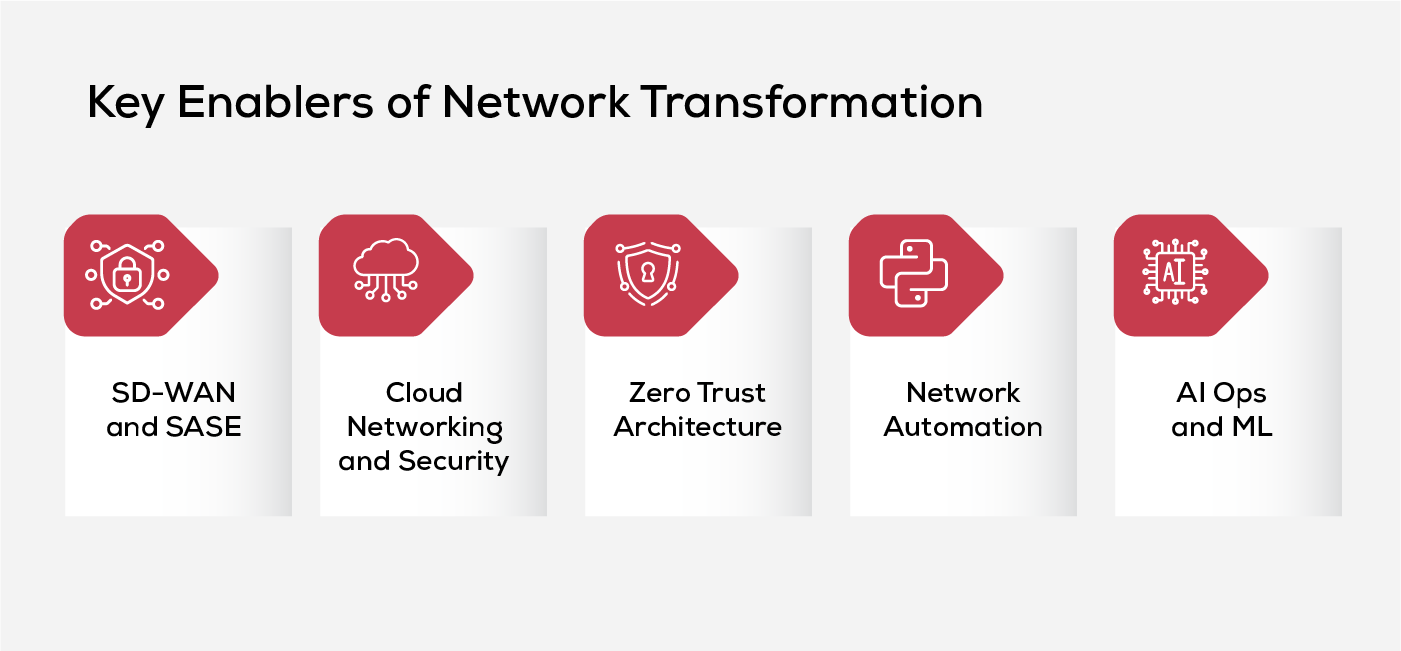
Network transformation is enabled by a combination of modern networking architectures, security frameworks, and intelligent operational capabilities. Together, these enablers help organizations build networks that are more resilient and easier to manage.
SD-WAN and SASE
SD-WAN provides a more flexible approach to connectivity by separating the network control layer from the underlying infrastructure. This allows IT teams to centrally manage traffic, dynamically route data based on real-time conditions, and optimize performance across multiple connection types. It also reduces dependence on costly private circuits by leveraging broadband and cloud connectivity.
Building on these capabilities, SASE (Secure Access Service Edge) integrates WAN functionality with cloud-delivered security services into a unified architecture. By bringing networking and security together, it enables consistent policy enforcement and secure access for users and applications regardless of location.
Cloud Networking and Security
Cloud networking enables seamless connectivity across multi-cloud and hybrid cloud environments, allowing applications and workloads to communicate securely while supporting the movement of data across distributed infrastructure. It also incorporates cloud-native security controls to enforce consistent policies, maintain visibility, and protect workloads across cloud environments.
Zero Trust Architecture
Zero Trust Architecture strengthens network security by requiring every user, device, and application to be authenticated and authorized before accessing any resource, regardless of where the request originates. Based on the principle of "Never trust, always verify," it helps organizations protect sensitive data and reduce the risk of unauthorized access.
Network Automation
Network automation uses scripting languages such as Python and automation tools to automate network configuration, provisioning, policy enforcement, and routine administrative tasks. It enables IT teams to manage network operations through standardized workflows rather than manual processes.
AI Ops and ML
AIOps combines Artificial Intelligence (AI), Machine Learning (ML), and automation to enhance network management. It analyzes operational data such as logs, metrics, and alerts in real time to detect unusual patterns, identify issues proactively, and predict potential failures before they occur.
Phases of Network Transformation
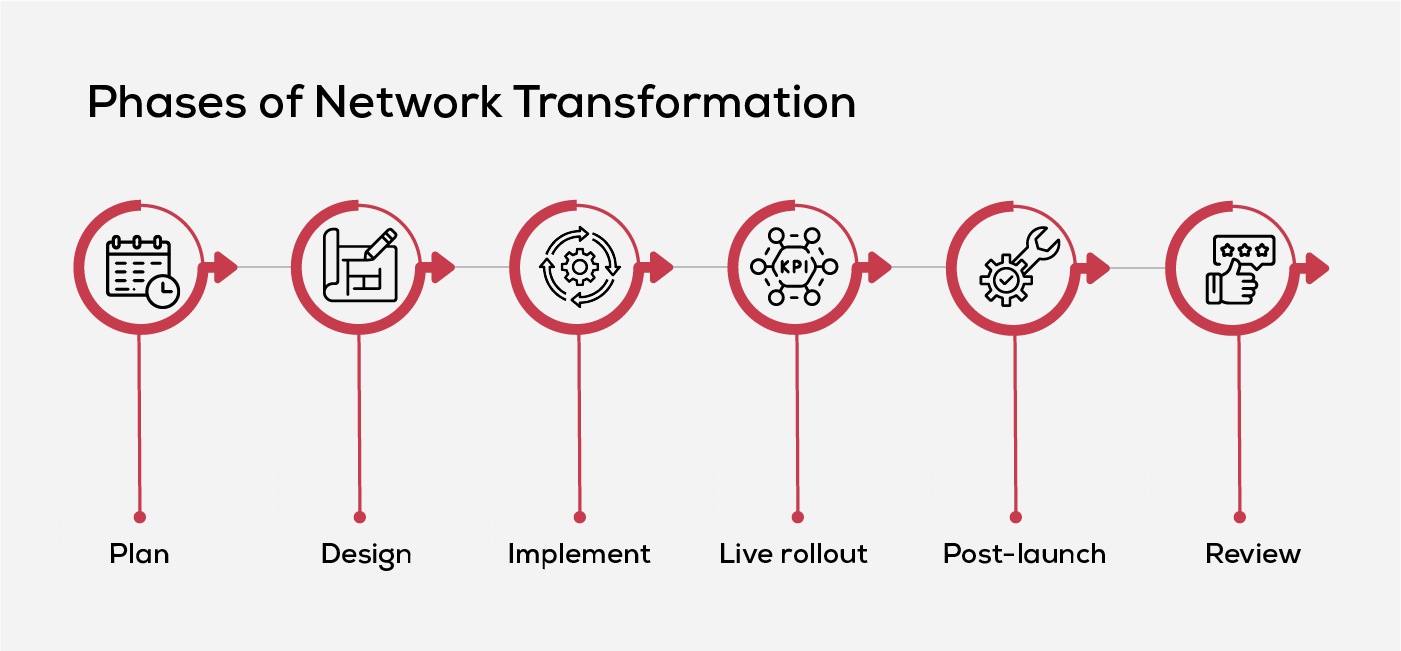
Although every network transformation strategy is tailored to an organization's goals and infrastructure, the following phases provide a structured approach to modernizing enterprise networks.
1. Planning
The first step is to assess the current network to identify performance gaps in connectivity, reliability and security. At the same time, organizations define future needs such as resilience and support for cloud and remote environments, creating a clear roadmap for transformation.
2. Design
In this stage, organizations create a clear blueprint for a modern network architecture by selecting the right technologies and defining how the network will operate. This also includes choosing reliable vendors that can support implementation and long-term network transformation services.
3. Implementation
After selecting a vendor, teams define a clear deployment schedule and begin with a small pilot to test performance and identify potential issues. This is followed by a phased rollout, ensuring the transition happens smoothly without disrupting the live network or impacting overall network performance.
4. Live rollout
Once the pilot phase successfully meets the defined Key Performance Indicators (KPIs), organizations move to a full-scale rollout. This is typically done in phases, allowing teams to manage risk, maintain stability and ensure consistent network performance across the entire deployment.
5. Post-launch
After the network goes live, continuous monitoring and optimization become essential to maintain performance and reliability. As the rollout expands across regions IT teams continuously monitor KPIs, identify trends, resolve issues proactively, and optimize network performance across the environment.
6. Review
The final step is to evaluate the success of the transformation by analysing outcomes against defined goals and KPIs. This helps organizations gain insights into what worked well and identify areas for improvement. These learnings can then be applied to refine future network transformation initiatives and enhance long-term efficiency.
Factors to Consider During Network Transformation
Organizations should evaluate the following factors before embarking on a network transformation initiative, as they can influence implementation timelines, costs, and overall project success.
Legacy system constraints
Legacy systems are often not compatible with modern tools and architectures, requiring custom integration, workarounds, and manual adjustments. This makes the transition more time-consuming and heavily dependent on specialized skills. In many cases, organizations must maintain both old and new systems simultaneously during migration, which adds complexity and increases the risk of errors.
Skill gaps within IT teams
Adopting new technologies often requires IT teams to learn new tools, processes and frameworks. This transition can be challenging, as existing staff may need additional training to manage and operate the modern network architecture effectively. Organizations may also need to hire specialized talent with expertise in areas like network automation, cloud platforms and security.
Budget and resource allocation
Upgrading infrastructure, adopting new technologies, and investing in skilled talent can require significant financial resources. To manage this effectively, organizations must plan carefully and define a clear Return on Investment (ROI). This includes balancing upfront costs with long-term benefits such as improved network performance and reduced operational expenses.

Best Practices for Successful Network Transformation
A well-planned network transformation minimizes risk and delivers better long-term outcomes. Consider these best practices when planning your transformation journey:
Align Network Strategy with Business Goals
Ensure your network transformation strategy aligns with business objectives and future technology initiatives. Evaluate cloud network solutions that can support long-term scalability and operational requirements.
Assess Existing Network Infrastructure
Evaluate your current network architecture, performance, dependencies, and integration requirements to identify gaps before implementation. This assessment provides the foundation for a modern network design.
Adopt a Phased Implementation Approach
Deploy changes in stages using pilot testing and controlled rollouts to reduce risk and maintain business continuity. Standardizing network orchestration and deployment processes helps ensure consistent implementation across the enterprise.
Build Security into Every Stage
Integrate cybersecurity, Zero Trust principles, and continuous monitoring throughout the transformation process to establish a secure network architecture from the outset.
Continuously Monitor and Optimize
Use network monitoring tools and performance analytics to drive continuous network optimization, identify emerging issues, and ensure the network continues to meet evolving business requirements.
Practical Applications of Network Transformation
Organizations across industries are applying network transformation to modernize their network infrastructure and support evolving business and operational requirements. Here are some common enterprise applications:
Hybrid Cloud Connectivity
Organizations operating across on-premises infrastructure and multi-cloud environments are modernizing their network architecture to enable seamless cloud networking. This ensures reliable connectivity between applications, workloads, and users while simplifying network management across hybrid cloud environments.
Distributed Enterprise Networks
Enterprises with multiple offices and branch locations are transforming their network infrastructure to centralize network operations, standardize policies, and maintain consistent connectivity across geographically distributed sites.
Secure Financial Services Networks
Financial institutions are modernizing their enterprise networking environments to strengthen security, support regulatory compliance, and protect sensitive financial data. Network transformation enables secure connectivity across digital banking platforms while supporting reliable, high-volume transactions.
The Future of Networking
The future of networking is being shaped by intelligent automation, next-generation connectivity, and distributed computing models that support increasingly dynamic enterprise environments.
Intent-Based Networking
Intent-Based Networking (IBN) is emerging as a key advancement in network management. It uses automation and artificial intelligence to simplify how networks are managed. Instead of manually configuring systems, administrators define the desired outcomes and the network automatically translates those requirements into actions across the entire network infrastructure.
5G and Advanced Connectivity
The rollout of 5G is increasing bandwidth and reducing latency, enabling more connected devices and supporting real-time applications such as IoT, autonomous systems, and immersive technologies.
Edge Computing and CDN Evolution
Edge networking is gaining importance as organizations process data closer to users, reducing latency and improving responsiveness. Content Delivery Networks (CDNs) are also evolving to support faster access to cloud services and distributed applications.
Emerging Use Cases
Technologies like Virtual Reality (VR) and Augmented Reality (AR) require ultra-low latency and high-speed connectivity. These demands are pushing networks to become more intelligent, adaptive, and performance-driven.
Conclusion
Network transformation is an ongoing journey that requires careful planning and the right expertise. With the right approach, organizations can modernize their network infrastructure and prepare for changing business and technology demands. Inspirisys helps organizations simplify this journey through its network transformation services that deliver secure, high-performing, and scalable network environments.
Frequently Asked Questions
1. How long does a typical network transformation take?
The timeline depends on the size and complexity of the organization. Smaller upgrades may take a few months, while enterprise-wide transformations can span several phases over a year or more.
2. How do you measure the success of a network transformation initiative?
Success is measured using metrics such as network uptime, latency, application performance, security incidents, and operational efficiency improvements. Business outcomes like user experience and cost savings also play a role.
3. Can network transformation be done without disrupting daily operations?
Yes, most organizations use phased rollouts, pilot testing, and parallel environments to minimize downtime and ensure business continuity during the transition.
4. What role do vendors and partners play in network transformation?
Vendors and service providers bring expertise, tools, and implementation support. They help design, deploy, and manage modern network architectures while reducing risk and complexity.
5. How does network transformation impact end-user experience?
It improves reliability, reduces latency, and ensures faster access to applications especially in remote and hybrid work environments, leading to a smoother overall user experience.