
For a bank, meeting a regulatory obligation involves more than identifying what the regulator expects. Teams need to determine which obligations apply to their functions, translate them into controls, assess whether those controls are effective, maintain supporting evidence and act on any gaps they uncover.
The difficulty often lies in connecting these activities. When regulatory requirements, controls, assessments and remediation are managed across different processes, it becomes harder to see how individual obligations translate into the bank’s overall compliance position.
A banking compliance framework brings these elements together through an organized approach. It provides a consistent way to manage regulatory expectation, assess compliance, track gaps and maintain visibility across the organisation.
Key Components of a Banking Compliance Framework
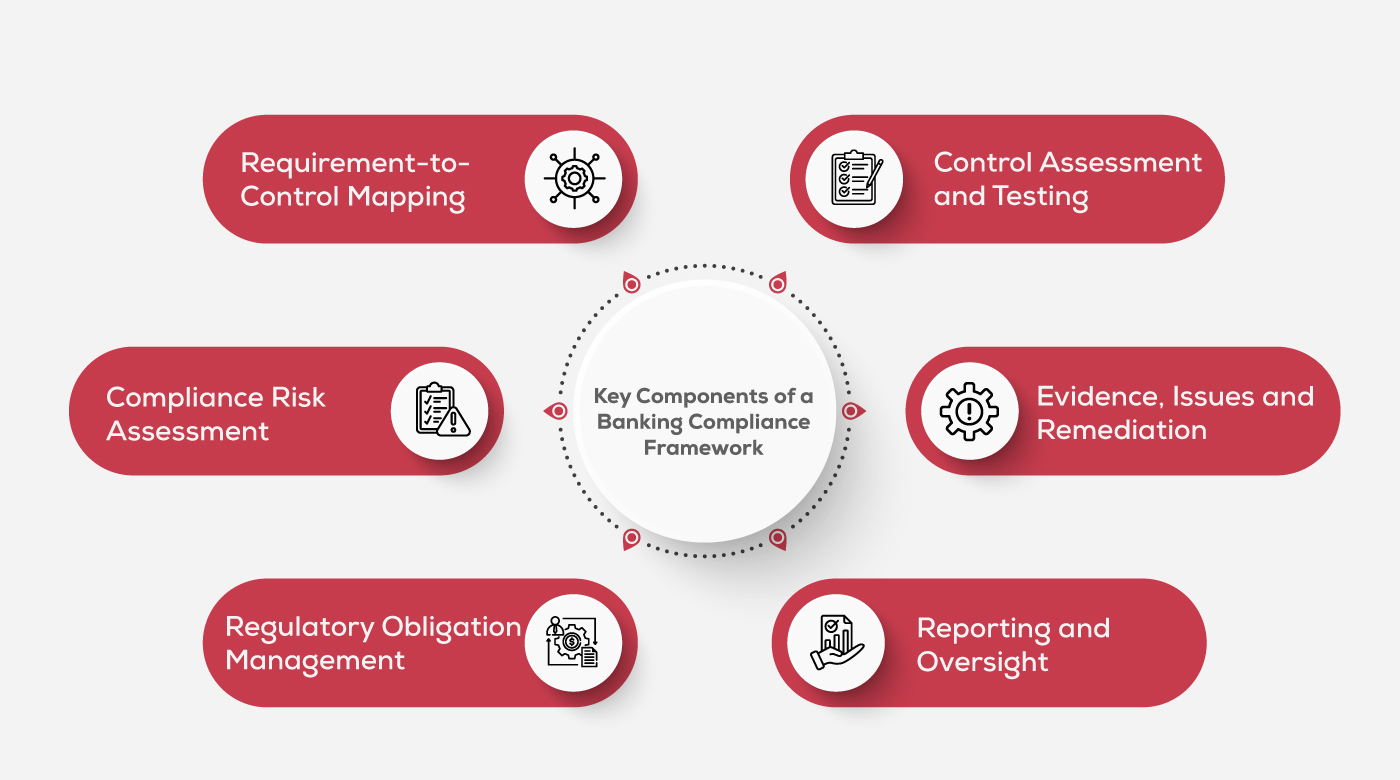
A banking compliance framework brings together several connected activities, each serving a distinct purpose in managing regulatory mandates and compliance risk.
1. Regulatory Obligation Management
Banks need a structured way to identify and maintain the regulatory obligations relevant to their operations. This involves tracking regulatory requirements, determining their relevance across jurisdictions, business functions and products, while assessing the impact of new rules, amendments, guidance and supervisory expectations. Where changes affect existing operations, the framework should provide a clear way to update them and maintain alignment.
2. Compliance Risk Assessment
Regulatory requirements must be assessed in the context of a bank’s actual risk exposure. Compliance risk assessments help evaluate inherent risk, measure the effectiveness of existing controls, and determine the resulting residual risk. This enables compliance teams to prioritize requirements and focus on areas that need closer monitoring.
3. Requirement-to-Control Mapping
The next step is connecting regulatory requirements to the controls established to address them. Each requirement should have clearly defined controls, accountable owners and expected outcomes. Mapping helps identify controls that satisfy multiple regulatory requirements, reducing duplication and providing a clearer view of compliance coverage.
4. Control Assessment and Testing
Controls must be evaluated to determine whether they can effectively address the requirements they are intended to support. Assessments and testing examine whether controls are appropriately designed, implemented and operating as expected. The results provide a basis for identifying control weaknesses and determining where corrective action may be required.
5. Evidence, Issues and Remediation
Evidence provides the basis for demonstrating how a requirement or control has been addressed. A structured framework should connect supporting evidence to the relevant assessment and make identified gaps easier to manage. Once a finding is identified, it moves through a structured remediation process, from ownership and corrective action to due dates, status tracking and closure evidence. This creates accountability and provides a clear audit trail of how issues are resolved.
6. Reporting and Oversight
The final layer is turning assessment data into meaningful management visibility. Reporting can bring together compliance status, open gaps, overdue remediation, control effectiveness and residual risk across functions. This gives compliance leaders and senior management a consolidated view of areas requiring attention and supports informed oversight, including reporting to the board where appropriate.
How Technology Can Strengthen Banking Compliance
As compliance requirements grow in volume and complexity, managing them through disconnected files, emails and manual follow-ups can make it difficult to maintain consistency and visibility. Technology can create a common operating layer for compliance teams, where information is clear, workflows are standardised and activities can be tracked across functions.
More importantly, technology can help banks reuse compliance intelligence. A regulatory requirement, assessment outcome or control mapping captured once can support related assessments instead of being recreated by different teams. Automated workflows can also reduce the administrative effort involved in coordinating reviews, approvals and follow-ups.
How Komply360 Helps Banking Compliance
A strong compliance framework requires technology that can keep pace with evolving regulations. Komply360, Inspirisys' Regulatory Compliance Management System, provides a centralized platform for managing compliance obligations across regulators such as RBI, SEBI, and IRDAI. By streamlining regulatory monitoring, assessment, and oversight, it helps banks maintain visibility, strengthen accountability, and manage compliance with greater consistency.
Frequently Asked Questions
1. What Indian laws and regulations do banks and financial institutions follow?
Indian banks and financial institutions are subject to regulations issued by the RBI and, where applicable, SEBI and other regulators. Key legislation includes the Banking Regulation Act, 1949; RBI Act, 1934; PMLA, 2002; FEMA, 1999; Payment and Settlement Systems Act, 2007; SARFAESI Act, 2002; Companies Act, 2013; and Digital Personal Data Protection Act, 2023, along with regulator-specific directions, rules and circulars. The exact requirements depend on the institution's activities, products and regulatory scope.
2. What is compliance in finance?
Compliance in finance means adhering to the laws, regulations and internal policies governing financial activities. It helps financial institutions meet regulatory obligations, manage compliance risks and maintain sound business practices.
3. What is risk management in banking?
Banking risk management involves identifying, assessing and managing risks that could affect a bank’s financial position, operations or reputation. It covers areas such as credit, market, operational and compliance risk.
4. What is AML compliance in banking?
AML compliance involves the controls and processes banks use to prevent money laundering and terrorist financing. It typically includes KYC and customer due diligence, transaction monitoring and suspicious activity reporting.
5. What is the difference between compliance risk and operational risk in banking?
Compliance risk arises when a bank fails to meet applicable laws, regulations or regulatory requirements. Operational risk results from inadequate or failed processes, people, systems or external events. The two can overlap, but they represent different risk categories and require distinct management approaches.