

The network sits quietly beneath almost every digital interaction an organisation depends on. Employees access applications from different locations, data moves between private infrastructure and cloud environments, and critical operations increasingly rely on systems spread across geographies. As technology ecosystems expand, the network has become part of a far more complex operating environment.
This complexity raises a fundamental question on how should networks be designed when the applications they support, the environments they connect, and the demands placed upon them are constantly changing? The answer lies in looking beyond individual technologies and understanding the architectural decisions that bring the entire environment together.
This article explores why network architecture has become central to building networks that can respond to the realities of modern enterprise operations.
Challenges in Modern Networking
Modern networks must support a combination of technologies, applications and operating environments that were designed for different purposes. Bringing these elements together while maintaining performance, security and operational control is one of the central challenges faced by network teams today. As organisations modernise their network environments, these challenges can be seen across several interconnected areas:
Managing Connectivity Across Diverse Environments
Organisations increasingly rely on a combination of private infrastructure, multiple cloud providers and SaaS platforms. Connecting these environments consistently can be challenging because each may follow different technical architectures and security policies. This can make it difficult to maintain consistent connectivity and performance across environments that operate under different conditions and may not be directly managed by the same team.
Supporting Distributed Applications and Edge Workloads
Applications and data are being distributed across data centres, cloud platforms and edge locations to support business operations closer to users and devices. This creates a more complex flow of traffic and increases the number of locations that need to be connected, monitored and secured. Maintaining a stable performance across such a distributed environment can be difficult, particularly when workloads and data requirements change frequently.
Balancing Performance and Security Requirements
Improving network access and speed can sometimes introduce additional security considerations. Greater connectivity creates more pathways through which users, applications and devices communicate, increasing the need for appropriate controls and visibility. Striking the right balance can be difficult, as tighter security controls may affect application performance and user access, while broader access can increase security exposure.
Managing Complexity Across Technologies
Technologies such as SD-WAN and SDN introduce programmability, centralised control and greater flexibility into network operations. However, managing these technologies alongside traditional infrastructure, cloud services and multiple vendors can increase operational complexity. Maintaining visibility across the entire environment and identifying the source of performance or connectivity issues becomes more demanding.
Working Within Legacy Infrastructure Constraints
Most organisations cannot redesign their networks from the ground up. Existing hardware, applications, configurations and investments continue to influence modernisation decisions. Integrating newer technologies with legacy infrastructure can create compatibility issues, migration challenges, while replacing existing systems can introduce cost, disruption, and operational risks.
These challenges cannot be addressed by examining network components in isolation. A decision about connectivity can influence application performance, security controls, cloud operations, and business processes simultaneously. Modern network architecture therefore requires a broader understanding of the technologies and environments that networks support, with the role of the network architect evolving accordingly.
Network Architects Need Knowledge Beyond The Network Layer
A network architect's role extends beyond designing and managing network infrastructure. To make informed architectural decisions, they must understand how networks interact with the broader technology environment, including infrastructure, cloud platforms, security frameworks and enterprise systems. This broader perspective helps ensure network designs align with operational requirements, support business objectives and integrate effectively with the technologies they serve.
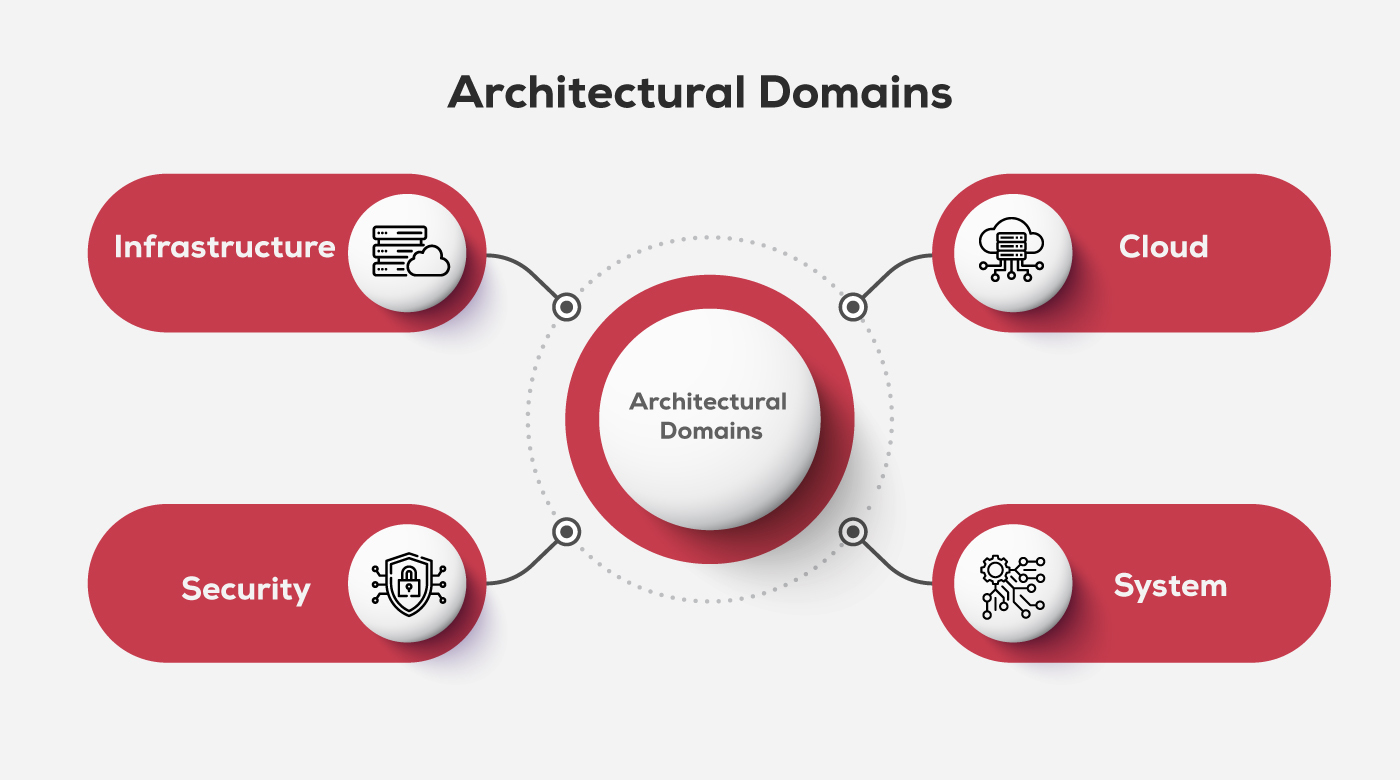
This requires knowledge across several technology domains that directly influence how networks operate and support the wider enterprise:
Infrastructure Architecture
A network architect works across interconnected physical and virtual servers, storage systems, virtualisation platforms and data centre infrastructure. This broader view provides context for how network resources are designed and allocated.
Strong understanding of this underlying infrastructure helps ensure network decisions are aligned with the requirements and constraints of the systems they serve.
Cloud Architecture
Network architecture increasingly extends across cloud environments, requiring familiarity with IaaS, PaaS and SaaS models, cloud resource provisioning and connectivity between cloud and on-premises infrastructure. This knowledge helps align network design with application requirements, performance expectations and business objectives.
Security Architecture
Security architecture defines how access, identity, and protection are incorporated into technology environments. Firewalls, identity management systems, segmentation, access controls and Zero Trust principles form part of this architectural framework.
For a network architect, familiarity with these concepts provides insight into the principles and relationships that govern secure access across an organisation's technology environment.
Systems Architecture
Systems architecture provides the broader context for how applications, databases, middleware, APIs and business processes interact. This perspective helps network architects design networks that support application performance, reliability and connectivity requirements. Knowledge of system dependencies and data flows also enables architects to assess the impact of architectural changes and make network decisions that align with the wider technology environment.
But understanding these areas is only part of the challenge, applying the right approach requires careful consideration of the specific context.
Best Practices Are Not Enough for the Unique Challenges of Modern Networks
Modern network environments rarely fit neatly into predefined models. While established approaches offer useful guidance, architectural decisions often need to account for factors that vary from one organisation to another. The challenge lies in applying sound principles without losing sight of the specific requirements, constraints and priorities of the environment.
Best Practices Provide Principles, Not Complete Solutions
Industry standards help architects establish approaches to availability, performance, security and manageability. They provide a starting point for decision-making, but they do not prescribe every design choice.
The same principle may require different implementations depending on the organisation's applications, operating model, users and technology landscape. Treating a recommended architecture as a complete solution can overlook requirements that fall outside its original assumptions.
Every Network Has Different Requirements
A bank may need to support branch operations, transaction systems, and strict regulatory controls. A manufacturing organisation may depend on connectivity across production facilities and operational systems. A hospital may prioritise the availability of clinical applications and connected medical equipment, while a technology company may operate across distributed, cloud-based services.
These environments create different architectural priorities. Even within the same industry, a branch-heavy enterprise may face connectivity and centralised management requirements that differ significantly from those of a cloud-native organisation. Network architecture must therefore reflect how the business actually operates.
Existing Conditions Influence Architectural Choices
Organisations rarely have the opportunity to redesign their networks from scratch. Existing infrastructure, technology investments, budgets, internal skills, and migration timelines all shape what can be implemented.
An architecture that appears ideal in theory may be impractical if it requires replacing critical systems immediately or exceeds available resources. Effective design must account for the starting point as well as the intended future state.
Security and Compliance Require Context
Security and compliance requirements also vary according to an organisation's industry, geography, operations, and risk exposure. Regulatory obligations may influence data handling, access controls, audit requirements, and technology choices.
A standard security approach may provide useful direction, but its implementation must reflect the organisation's specific risk profile and obligations. Applying controls without understanding their context can create unnecessary complexity or leave important requirements unaddressed.
Standardisation Has Limits
Consistency across network environments can simplify management, but excessive standardisation can reduce flexibility. A design optimised for one operating model may introduce performance, integration, or management issues when applied elsewhere.
The maturity of network architecture is therefore not measured by how closely it follows a standard blueprint. It is measured by how effectively it translates established principles into decisions suited to the organisation's environment.
Best practices should serve as guardrails, not rigid instructions. The role of the network architect is to apply proven approaches with the judgement required to address the specific realities of the network being designed.
Why Network Architecture Matters More Than Ever
Modern network architecture is not about choosing the most advanced technology or following a standard design. It is about making decisions that fit the organisation's current operating realities while keeping pace with where the business is heading.
As organisations adopt cloud services, distribute applications, modernise infrastructure and face evolving security requirements, those decisions become increasingly interconnected. The architecture needs to support where the organisation is today while leaving room for where it is heading next.
The strongest network architectures are therefore not defined by how closely they follow a standard blueprint, but by how well they translate established principles into practical decisions. That is what turns the network from an underlying layer of infrastructure into an enabler of how the business operates, adapts and grows.

Frequently Asked Questions
1. What are the main types of network architecture?
Common types include client-server, peer-to-peer, cloud-based and hybrid architectures. Enterprise environments often combine multiple models to support different workloads and business requirements.
2. What are the differences between client-server and peer-to-peer network architectures?
Client-server architecture centralises services and resources on dedicated servers, providing greater control and scalability. In contrast, peer-to-peer architecture allows devices to share resources directly without relying on a central server.
3. How do network architectures differ across LAN, WAN, and cloud networks?
LAN typically connects devices within a limited geographic area, while WAN connects networks across larger geographic distances. Cloud networking enables connectivity between users, applications and resources across cloud environments and, often, on-premises or distributed infrastructure.
4. 4. What is layered architecture in computer networks?
Layered architecture divides network communication into distinct functional layers, with each layer handling specific tasks. This separation simplifies network design, management and troubleshooting.